I love
experimenting in the garden. It's the greatest joy to garden, especially when I get to try new ideas. It starts with a "hmm, wonder what would happen if..." and then I start experimenting. I have a
challenging yard for gardening: shade, clay soil, and
crowding. I've mentioned both on this blog and on social media some of the experiments that I'd either started or wanted to start. Some are
great successes, and some wild failures. I thought I'd post some updates and let you know what I'm learning. I'll definitely give more details as the season progresses, but this stuff is so exciting, I wanted to share it with you all ASAP.
 The Indoor Winter Paradise.
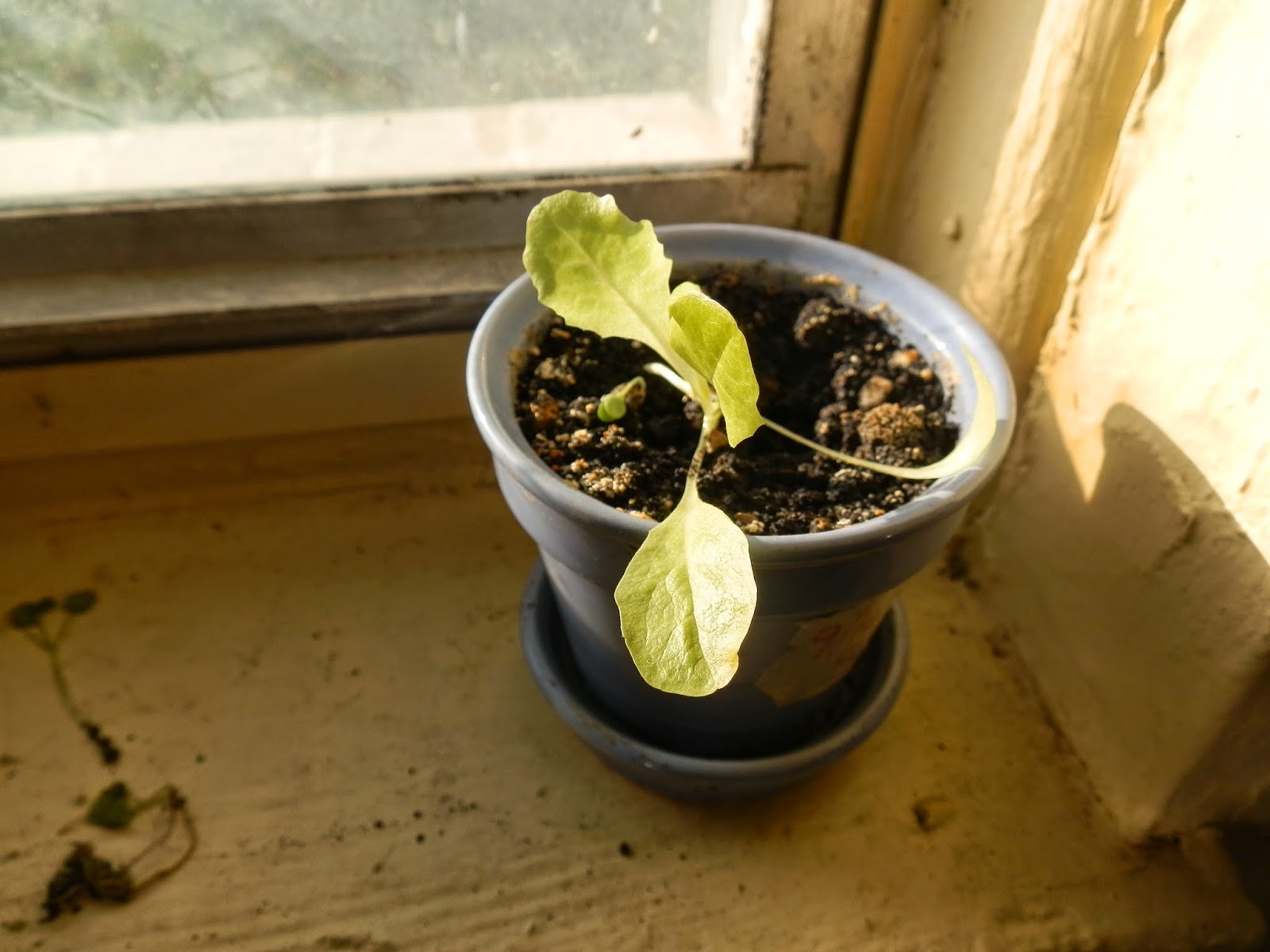
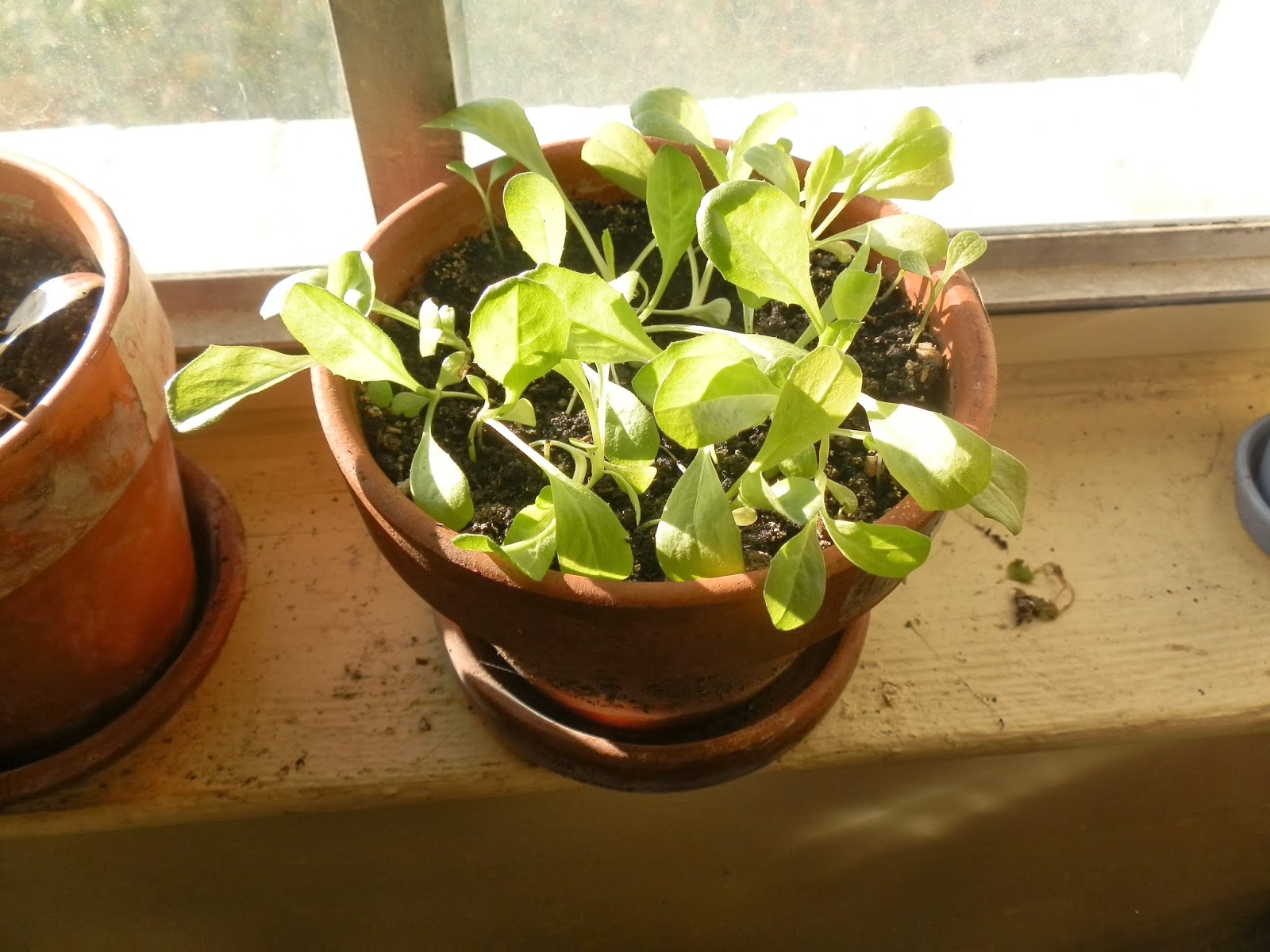
 Over this past winter, I grew lettuce indoors. I wrote a detailed piece on it
here. To sum up: I planted 6 containers. One was a tiny container with 6a single Black-Seeded Simpson lettuce plant. It was cute, to be sure, but a waste of space. Next year, I'm sticking to 6" containers or bigger. 2 were planted to spinach, and 3 more to red sails lettuce and endive. I planted the last 5 heavily. The spinach never grew large, but the tiny leaves were wonderful in salads. However, the two containers barely produced any real bulk, and so this coming year I will not plant more spinach indoors. The lettuce and endive containers were incredible. We ate loads of salad all winter long. A thorough harvest of the containers was enough for 2 large side salads. I will definitely do this again every. single. year. There is no better way to beat the doldrums of a bleak winter than to harvest a fresh salad. Seriously, though.
The Senior Citizen Peppers. Last year I heard about overwintering peppers and so I decided to give it a go. I'd only got 1-3 peppers per plant last year, so I figured I had nothing to lose. I chose the best two Jimmy Nardello peppers I had last year: the one that gave me the first pepper (although only the one) and the one that gave me the most (3). I dug out about 8" from the stem and plopped the plant into a medium-large container. I filled it in with earth and reused potting soil. When I first brought them in from the crisp autumn air to the warm indoor climate, they exploded with new growth and flowers. I didn't want them to pucker out, so I picked off all of the flowers so they wouldn't put energy into producing fruit. I put them into an area that got some indirect light, but no direct light. It was by a leaky window, so it was cool, but not freezing. After a couple of weeks, they dropped some of the leaves and went dormant. I watered them every week or two but didn't give them any food. Then, in spring, quite on their own, they vamped back up. Lots of new growth and flowers, so I moved them to an area with some good light. I picked off all the flowers so they could focus on growth for now. I planted them out into the garden the same day as my first-year transplants. Now, several weeks later, the results are in. First year plants: 1 of 7 has two small peppers, the rest have flowers only or nothing at all yet. Overwintered plants: I've already harvested 5+ full sized peppers (unripe, but huge) from each plant. Some readers have said you can overwinter a plant for several years. I'll definitely do this again every year.

 The Pairing.
 Tomatoes and Pole Beans. Last year, I planted my Scarlet Runner Beans next to my tomatoes. They kept going off their trellis and onto the tomato plants. At first, I tried to put them back on the trellis, then just let them go. The bright red flowers looked beautiful next to the rich green of the tomato plants and they seemed happy enough together. This year, I picked some pole beans to plant with my tomatoes intentionally. I picked Dean's Purple Podded Pole Beans so I could see the beans among the leaves for easy harvest. I planted 4 beans around the tomato cage. The beans grew up the cages, then over to another cage, then out, then dropped down to lower on a cage, and back up. They are all over the tomato plants. The flowers and stems are a lovely purple and it looks incredible. I have no pole beans yet, but lots of flowers, so hopefully soon. Of the 8 tomato plants with beans growing around them, 5 have tomatoes and loads of them. 3 do not have any tomatoes or flowers yet, but they are the plants in the back and in the shadiest part of the bed (remember that I have little full sun, and this affects my garden a lot), so I assume that the shade is the cause, and not the beans. I will update as the harvest season arrives.


 The Perpetual Lettuce Bed.
 I dug up an overgrown, ugly area of the yard. It is shaded by a big tree in the neighbor's yard. I want it to become a perpetual lettuce bed. For this year, I planted a lot of random things: broccoli (all eaten by bugs), cauliflower (all eaten by bugs), spinach (disappeared overnight), cilantro (spotty germination), pak choi (all eaten by bugs), mustard greens (fantastic harvest that has lasted months so far), summer squash (loads of flowers, but no fruits yet), beans (no germination whatsoever, but they were old seeds). Now, I have some radishes and lettuce planted in some of the spaces where other things had failed to grow. The radishes seem fine, but the lettuce had a poor germination. I think the giant tree that shades the entire area may be responsible for the spotty germination, as the plants that have done okay are farther from the tree. There are some tomato and pepper plants that volunteered from the homemade compost I dumped on last autumn (black soldier flies turned that batch into a horror-show of writhing, so I dumped it out for the birds to feast on...it was terrifying, really). The tomatoes have fruited and the peppers have flowers. There are a lot of weeds, but I've been removing it as I go. This winter, I plan to dump on some compost and loads of leaves and plant it to lettuces in early spring. For this year, I've gotten some food and hope to get a little more, but it is not wildly successful. I do have hope that it can grow something, and I'm not giving up on it quite yet. If next year the germination is pathetic, I'll just sow it to something like mint and let it go wild.

 The Decorative Container Garden.
 I decided that for the front garden, in the area between the sidewalk and the street, I wanted to put some large containers planted to pretty edibles. I decided on Burgundy Okra as the thriller based on it's rich stems and fruits, milkmaid nasturtium as a spiller, and freckles lettuce as the filler.They were not as brilliant as I expected. It's a boring planting really, and just didn't work out as I'd planned. The okra falls over without support. The nasturtium variety I picked is bushy, not spilling like I'd read online (What? Not everything you read on the internet is truth???). The freckles lettuce is an effective filler. One planting gets a bit more sunlight and is much bigger. The okra plant already has fruited. The nasturtiums are in bloom. The lettuce is wicked big and I'm harvesting enough for two-side salads every day. The other planting? The okra hasn't flowered yet. The nasturtiums failed to germinate the first time, and there's only one flower. The lettuce is much smaller and I've had to plant in a lot of Black-Seeded Simpson lettuce to try to fill it in a bit (that's all the lettuce seed I had left). The second planting is under a tree, so it get's less sunlight, and I think more rain since it is right under a branch end. It is often flooded (Yes, I need to drill a couple holes). I'll keep trying at edible landscaping, but this planting does not work.

 The Pea High Chair.
 I have an old wooden chair I dumpster dived. It's wobbly but pretty. I imagined it covered in pea vines. I plopped it in the garden and planted peas all around it. I planted spinach underneath it, thinking that since spinach bolts easily, maybe the shade from noon-sun would protect it. The peas germinated well and looked great. And then....then the groundhogs came in. They ate them down, and then we'd attempt to repel them with airguns, solar-powered high-pitched squealing motion detectors, screaming, cursing, and finally, even some organic small-mammal repellent (I believe it was some sort of predator urine). They kept coming back and nibbling the shoots. Sigh. I got a few peas, but that's it. The spinach germinated okay, but died off shortly. Failure. I will not grow peas again at this property. Two years I've planted, multiple times a spring, and the groundhogs or rabbits always get them.
The Hugelbeet-Inspired Bed. There was a low spot in the back yard, so I decided to do a hugelkulture-inspired project. I dug out the sod and top soil, then laid down a bunch of branches and logs. I sprinkled in compost and composted cow manure, then added some leaves then turned the sod upside down on top. I put the top soil on top of that, and added a couple bags of compost. It rested a good 6 inches higher than the rest of the yard. As time has passed, it has shrunk down so it is roughly even with the rest of the yard instead of being 6 inches lower than the surrounding ground. On that count, it is a success. In other ways, it is mixed. I planted beans,cukes and squash on the bed. I know that squash is a heavy feeder, but I had extra seedlings, so there they went. The squash and cukes have flowered, but no fruit. The beans all flowered like mad and have put on a thick set of beans. The leaves on everything are light green and yellow. I think this is simply a matter of it being a first-year bed, and the wood is tying up some nitrogen while it breaks down. Between the aging of the wood, some coffee grounds I've been dumping on it, and my plans to work in the expired bean plants, I think next year will be better. I'm getting a harvest from it, and that's the important thing! There have been a lot of weeds, but I've noticed that in every new bed. I've been faithful at weeding, however, and the stand of weeds has diminished significantly.

 The Crowded Room.
 I have a couple containers in the front garden by the front door overcrowded in an attempt to see just how much I can cram in and still get a harvest. One planter has a tomato plant and an underplanting of radishes and beets. The other has 4 pepper plants and an underplanting of radishes. In the first container, I have a lot of tomatoes. Score. The beets have been sulking and not putting on any growth. The radishes are starting to bolt. I will likely harvest the beet greens for salad and allow the radishes to put on those deliciously crunchy seedpods. In the second container, the peppers look okay and have unopened flower buds so far. I will likely harvest half of the many radish plants to put into salads and see if the remaining plants will bulb up at all.
So what about you? Have you had any fun experiments in the garden?
Shared on:


 In mid spring, the plants came back. All of a sudden, they started growing again and putting on flowers. I kept picking off the flowers, but as soon as they started growing, I moved them to a warmer, sunnier window. They put on flush after flush of flowers, each of which I picked off, until we were past our last frost date. I moved the plant outdoors during the day, and brought it back in at night for a few days, then planted it in the garden. After a few days of recouping from transplantation, it started growing fruit like crazy. I planted some nice, sturdy first-year transplants the same day in the same bed. The overwintered peppers had provided me with 10 full sized (but still green) peppers before the first-year plants had set a single fruit. I ended up getting dozens of peppers from each of the overwintered plants, much more than from the newer plants. I picked them when they were full sized but not ripe and they put on a new batch for me.