Showing posts with label saving money. Show all posts

Friday, April 10, 2015

Avoiding Frugal Burnout

If you're anything like me, the easiest part of saving money is when you first decide to save for a big, important goal. You're all excited about your plans, and so it is easy to cut the expenses to the bone. But as time goes on, you start to lose that clear picture of the goal. You start to focus more on what you are giving up now, and that makes it all too easy to justify outrageous splurges. For example, in saving for a down payment on a house, you feel like it will be forever until you finally get that home, but tonight you could really use a nice meal out. You've been working so hard. Then, feelings of guilt kick in, and you start to concentrate on how you slipped up on your savings goal, and that bums you out, so you get a little sometime to cheer yourself up. Vicious little cycle.

Plan ahead to avoid this. Frugal burnout happens to the best of us, but doesn't have to set you back in saving for your goals.

First, break that big goal down into manageable little goals. Rather than setting a savings goal of $18,000 towards buying a house, break that down. You have $3k in closing cost, then break the down payment amount into smaller chunks. When I was saving for my house, I broke it down into goals closing costs, then closing costs plus 5% of the down payment, then 10%, 25%, 50%, 75%, 100%. I drew a simple chart that I would mark each time I made a deposit into my savings account. Every time a goal was met, there was great celebration. I hung the chart up on the refrigerator so we could see it every day and stay excited as we inched closer to the main goal.

No one wants to feel deprived. It's hard to keep focused on some future benefit if you don't enjoy anything now. Rather than trying to do away with all splurges, and then pay for it with unplanned excessive splurges, plan to treat yourself. Enjoy small things on a regular basis. For example, I love good cheese, so every payday (every other week), I allow myself to go to the cheese counter at the grocery store and pick out a small chunk of good (we're talking that $25/lb stuff) cheese. I only spend around $4 each time, so this doesn't derail my savings goals. However, I really enjoy that cheese. I add a tiny bit to my salad or sandwich, or eat a small piece with a cracker. It lasts around a week, and enriches many meals. If by spending that $4 (annual total of $104/yr), I don't need to go out to a nice restaurant once a month at $50 a pop, I save around $500 a year. Plus, I get several special meals each month.

It doesn't even have to be money out of your pocket. Maybe it's just time. Rather than buying yourself something, give yourself permission to spend the entire day in bed reading a great novel. Eat a good dessert. Blow off the housework for one afternoon and go for a hike. Enjoy these moments, and look forward to them. Since they are a regular part of your life, you can enjoy the now while saving for the future.

Look for different ways to save money. If you feel like it's just the same-ol-same-ol, look for ways to switch it up a bit. Read some good books on frugality and find a few new ways to save money just so there's some change in your routine. Maybe try line drying clothes as an excuse to be outside on a warm, breezy day or bake bread from scratch. You'll save a little money, and it's fun.

When most people decide to save money/be more frugal, they make a grave error. They slash the entertainment budget. Sure, entertainment isn't absolutely necessary, and it's usually costly for dinners out, movies, concert tickets, lift tickets, takeout, etc. However, I feel that this is the surest way to frugal burnout. If all you do is sit at home thinking about how much fun you used to have when you were spending money, you'll be miserable. Instead, increase your entertainment carefully. Spend an afternoon googling free or cheap things to do in your area. Maybe there's a concert/play/movie in the park series that you can go to every weekend. Many a coffee house has a free jazz band on Tuesday nights. Maybe a museum is free on Sundays. Start doing these things more often than you used to go out when you were paying. You'll find that your life is more rich and full and you're saving money.

What are your favorite ways to prevent frugal burnout?

Shared on:

Tuesday, November 18, 2014

This Week...Beyond Money 11/10 - 11/16

For me, a life beyond money is making choices so that you can live the best possible life, regardless of your income level. Obviously, you have to make a living, but there are many ways to improve your quality of life without increasing your income levels and correspondingly your expenses. This regular post will be some of the ways that we improve our quality of life beyond just trying to make more money.


Gardening:
* Not much to do now. I'm already missing it desperately. We got a heavy snow fall late Sunday night, so everything is blanketed now.
* Harvested some more lettuce seed from the front-garden containers. I have about a packet's worth now. It's not saving me a lot of money, but I'm learning and hopefully over time will end up with the best lettuce seeds for my microclimate.

Cooking/Groceries:
* Didn't grocery shop at all this week. Ate from the pantry and freezer.
* Made pork stock from leftover bones and loads of veggie scraps. It's delicious and practically free.

Food Preservation:
* Dehydrated lemon peels to use in making syrup later in the winter.

Fun:
* A musician friend of ours hooked us up with discounted tickets to see the symphony. Tickets were $12 instead of $50. We were beyond thrilled. It was one of the nicest nights out I've had in a long time. I was wide-eyed and smiling the entire time.

Nature:
* We went for a hike at a local state park. It was a 5 mile hike around a lake. We off trailed a bit, so we went around 6 miles. With the autumn colors, and just enough leaf fall for great views, it was breathtaking.

Frugality:
* Avoided shopping as much as possible.
* Switched health  insurance for a savings of $50/month, plus lower costs when we use it.

Waste Reduction:
* Planned to use leftovers in other meals to avoid waste.
* Rinsed cans of salsa, tomato sauce and enchilada sauce and put in the Trash Chili container in the freezer. I almost have enough to make a batch.
* Cooked with animal fats saved from cooking other dishes and making stock.

Work:
* Trucker picked up an extra shift so we could have a little more money to put towards visiting a sick family member out of state.
* We packed our lunches instead of buying something. I drank free coffee in the break room.
* Trucker brought home english muffins and scones from his job that were expired. Absolutely delicious, even though they were day old.
* I signed up for our insurance at my new job. We were on a private plan through the marketplace. Even with our subsidy, we were spending a lot for a really bad plan (and just got a notice saying that in the new year it would go up by $30+/month). The insurance at my job is fabulous with a much lower deductible. It includes health, dental, prescription, vision, life and disability insurance for $50/month less than our old plan would cost us (for just really bad health, dental and vision insurance).

Preparation:
* Winterized the vehicles. Put blankets in the cars just in case. Also put in a couple granola bars for emergencies or just in case we forget our lunches for work. I get granola/protein bars for less than a dime at the salvage grocer so this is cheaper than anything we could buy for lunch.

Future:
* Every day on my lunch break I've been writing on my book. I am getting in the habit of writing daily. Even just writing on my lunch break every day would add up to around 60,000 words a year.


What did you do this week?

Monday, February 17, 2014

Salvage Grocery Shopping

Want to save money on groceries? Like keeping perfectly edible food from going into the landfill? Want to have an adventure while grocery shopping? Check out your local salvage grocery!


Salvage groceries buy closeouts from other stores, so there is no guarantee of what you'll find. Sometimes the selection is awesome, other times it's lacking. The items are either discontinued items, items with changed packages (say, 12 oz packages left over after the company starts making 11.5 oz packages), dented cans or boxes, seasonal items, expired products or items leftover when a store closes. My favorite salvage store gets items from health food stores, so I find lots of organic products for a price comparable to Aldi. Overall, the prices are better than the sales price at the chain groceries in my city, and sometimes I get incredible prices. I am able to buy "higher end" products than I would otherwise be able to afford. These items would likely be thrown away if it weren't for salvage groceries, so I like knowing that by shopping there, I'm keeping perfectly good food from being destroyed (When I worked at a grocery store, management made us throw all dented items into the garbage, and lock the dumpster to keep people from diving it). Plus, I never know what I'll find, so it's an adventure, or at least as close as grocery shopping ever gets.

Now for the warnings. Know your prices. Some things cost more at salvage stores than the sales prices at the chain grocer. Check the packaging. Dented cans are probably okay if it's a small dent that isn't on the lid or seam, but pass up badly dented cans or anything that is rusted, leaky, missing a label, or otherwise looks suspicious. Don't buy boxes or bags that have been torn open and taped back together. Check packets/bags to see if they are sealed or if there are tears. Check the expiry dates. As many articles lately have shown us, "use-by" or "best by" dates are more of suggestions than rules, but it's probably best to avoid anything with an expiry date of 2008. Buy things you eat; don't buy something you don't like just because it's an awesome price.

Here's the list of items that I found on my latest trip:

Cascadian Farm Purely O's cereal, organic...2 @ $.79
Barilla spaghetti...1 @ $.59
Agave nectar...1 @ $1.99
King Arthur Self Rising Unbleached flour...5 lbs for $.99
Tollhouse White Chocolate Chips, 24 oz package...1 @ $1.99
Corn tortillas, 10-12 packs...8 @ $.10


Vlasic Roasted Red Peppers...4 @ $.49
Mrs. Sassard's Bread and Butter Pickles...1 @ $.99
Chipotle salsa...1 @ $.99
Wolfgang Puck Marinara...1 @ $.99
Colavita Spicy Marinara...1 @ $.99
Le Roselli's Spaghetti sauce...1 @ $.99
Diced, fire-roasted tomatoes...1 @ $.59
Smuckers Triple Berry Topping...1 @ $1.59
Smuckers Peach Preserves...1 @ $1.59
Jif Hazelnut Chocolate spread...6 @ $1.49

Kraft Mayo, fat free...2 @ $.39
Kraft Mayo...1 @ $.79
Miracle Whip...3 @ $.99
Hellmann's Mayo...1 @ $.39 (Yes, I am aware this is a lot of mayo. We had depleted the pantry supply so it was on our list, and both of us tossed some into the cart without the other realizing it. We are re-homing a few jars to someone who can use it)
Kraft Creamy Italian dressing...1 @ $.20
Kraft Ranch dressing...1 @ $.20
Ken's Steak House Chunky Blue Cheese dressing...1 @ $.20
Kraft Thousand Island dressing...2 @ $.10
Wishbone Buffalo Blue Cheese dressing...1 @ $.99
Tony Chachere's Spicy Sweet Sandwich Sauce...1 @ $.89
Kraft Sweet and Sour sauce...1 @ $.79
Peppadew Mustard sauce...1 @ $.79


Wolfgang Puck Creamy Tomato soup, organic...1 @ $.69
Wolfgang Puck Chicken and Wild Rice soup, organic...1 @ $.69

Jerky sticks...2 @ $.49
Gum, 3 packages of 15 pieces...1 @ $.99
Craisins...1 @ $.99


8 o'clock coffee, 24 oz package...1 @ $6.99
8 o'clock coffee, 12 oz package...1 @ $2.49
Folger's Vanilla Biscotti coffee, 10 oz package...1 @ $2.49
Chock Full O Nuts coffee, 11.3 oz package...1 @ $2.49
Maxwell House coffee, 11.5 oz package...1 @ $2.49
CDM Coffee and Chicory, 13 oz package...1 @ $2.49
Seattle's Best Coffee, 12 oz package...1 @ $2.49
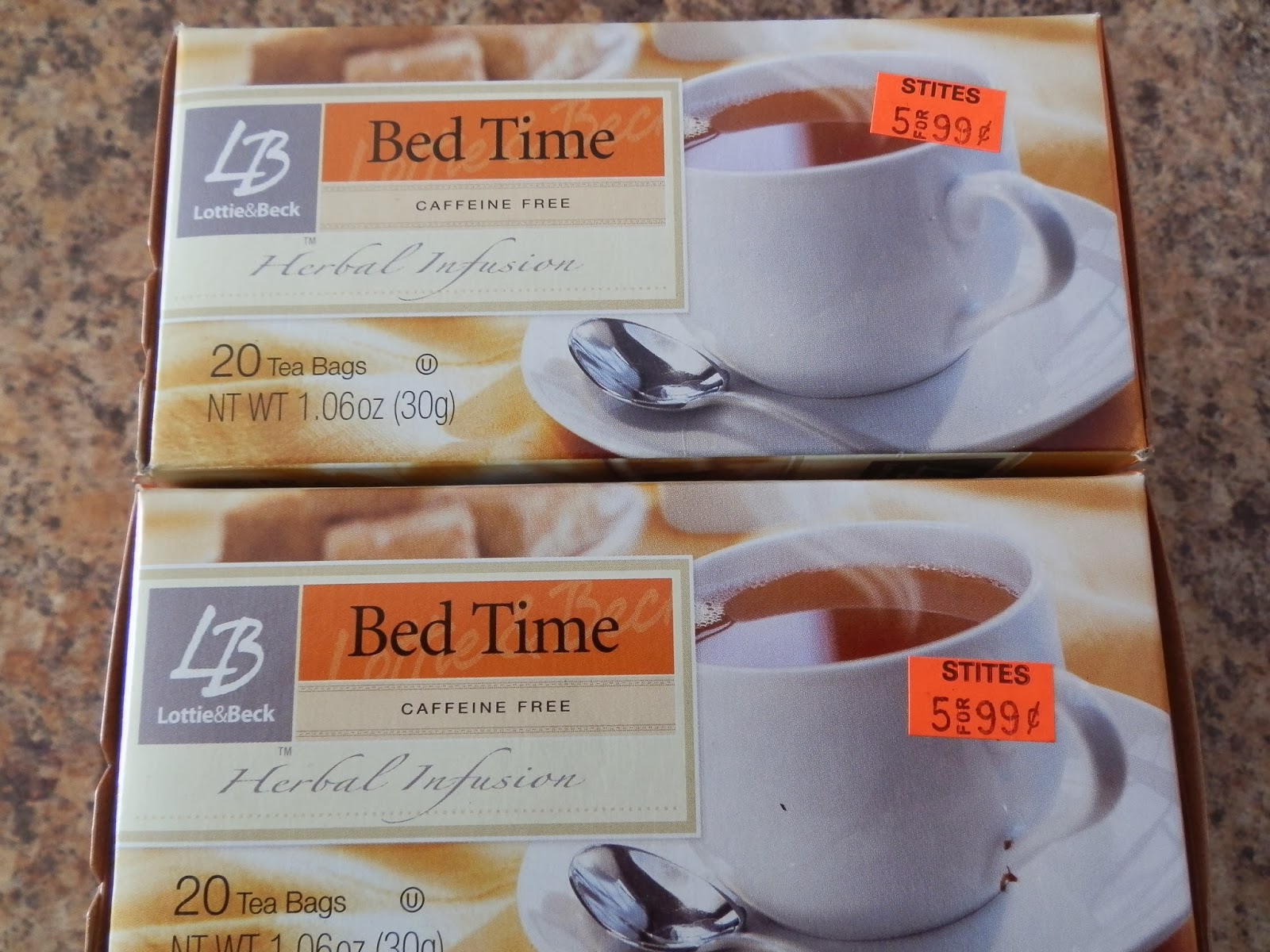
Lottie + Beck Bed Time Tea, 20 pack...2 @ $.20


Temptations cat treats, 3 oz...3 @ $.99
Goodlife cat treats, 3 oz...3 @ $.99
Hartz Crunch 'N Clean cat treats, 3 oz...4 @ $.25

Simply Green toilet paper, 100% recycled...16 @ $.99

Cologne...1 @ $1.99
Reusable cold drink cups and straws, 2 pack...1 pk @ $4.99
Utility lighter...1 @ $.79
Ball pint canning jars with lids and bands...6 @ $.33 (Trucker found these! Best deal I've ever found on canning jars)
Bathroom rug...1 @ $2.99


We also bought some bulk assortments: 2 bags of snacks/misc items for $3.99 each and 3 bags of seasoning packs for $.99 each. Within those bags we got:

Lifesaver mints...95
Kit Kat snack sized candies...13
Fruit gummy snack packs...27
Russell Stover candies...2
Ferro Rocher chocolates...3
Candy toys (novelty candy dispensers)...3
Instant oatmeal...3 packs
Caribou Coffee K cups...5
Starbuck's Via packs instant coffee...6
Cake Mate Writing gel...1
Moon Pies...16
Odwalla granola bars...32
Quaker fruit and nut bars...4
seasoning packs from salad dressing to grilling to canning mixes...73


We bought the snack/misc bags for the granola bars that we use when hiking and the seasonings bags for the canning/grilling seasonings. A lot of those items will be given to someone who uses them. We don't have a Keurig coffee maker, and I don't know anyone who does, so I just opened them and dumped them into another coffee container.


Our total purchase was $127.32. To see how much I saved, I added up the sale price that I would feel comfortable paying at my regular grocery store for just those items that I would actually buy (so the Keurig cups, moon pies, etc are not included). The price I would have paid at my store was around $265. This trip saved me $138. Also, for some items, I got more variety, or a higher-end product. For example, the salad dressing, I compared paying $1 for store brand dressing, but the store brand that is $1 at my store has only 4 varieties. For our coffee, we buy basic store brand, or whatever is on a good sale, but we love it when we get the coffee and chicory blend for about the same price per ounce.

Do you ever shop at salvage groceries? Love them? Hate them? Any great scores you'd like to share?


Shared on:

Homemade Mondays

Monday, October 21, 2013

Grocery Shopping Primer

For those just striking out on their own, or who are for the first time trying to get their grocery budget under control, here is a crash course in grocery shopping. The tips below can help you spend less while getting healthier, tastier food.

First, all the basics everyone already knows: don't shop hungry, avoid bringing along the kids, pay attention, avoid impulse buys.

Always shop with the sales paper. When I get my sales paper, I highlight any items that are a good price, and that we need. If apples are on sale for $.54 a pound, I plan on picking up some for snacks, baking, applesauce or even to freeze or dehydrate to use later. If pasta is on sale for $.75 a box, I circle that and plan on buying a lot. If you don't receive the sales paper in the paper or mail, grab it when you get to the grocery  or check online.

Make a list of items you definitely need and try to stick to it as much as reasonable possible. You don't want to just waltz in and throw whatever looks good at the moment or you'll end up with lots of snacks and sweets, and spend a lot more than you budgeted. On the other hand, you don't want to be so rigid that you pass up a fantastic deal on an item you regularly use just because it wasn't on your list. Some people also find great value in making a meal plan around the best sales in the paper, and this is especially good for those who have very busy schedules so you can avoid the after-work "what's for dinner?!?!" panic.

Shop first at the cheapest grocery store you can, then work your way to the more pricey ones to get anything that you can't find at cheaper venues. About every three months I shop at a really good salvage grocery and stock up on whatever they have at a good price, usually breakfast cereal, salad dressing, pasta, and juice. I save weekly for this grocery trip and plan to stock up on three months worth of food to get me through to the next trip. It's an hour away, so if I lived closer I'd shop more frequently. I often shop at Aldi or similar discount, no-frills grocery store. That's the best way to buy dairy, eggs, baking supplies and canned soups and veggies. Sometimes I shop at Kroger, Meijer or similar big grocery store chain. I get everything left on my list after the cheaper stores.

Sometimes bulk purchases save lots of money. Sometimes they don't. Sometimes generic brands are a fantastic deal, other times they're the same price as name-brand. So always, always, bring a calculator (this is the one benefit to everyone always having their cell phone on them). Divide the price for the item by the units of the package (pound, number, ounce, etc). Check this for the big package and the small package, the generic and the name brand. In this way you'll know which item is actually the cheapest, and can purchase accordingly.

Generic is often just as good as name brand, but not always. Especially for things such as salad dressing, the recipe may be better with one brand than another, or there may be a limit to selection in the generic (then again, since when do we need 30 different varieties of ranch dressing?). However, do try the generic. If you like it, you'll likely save a lot of money over the long haul. If you don't, you're probably not out much money. If you have a bad experience with one store or knock-off brand, try another. Items such as white sugar are the same regardless of brand. Buy the cheapest per pound. Regular all purpose flour is pretty much the same. Differences in flour come with buying bread, cake or other specialty flours, and are really not a big concern for the casual home baker. I'll bet your kids won't hate you because your cake was just moderately fluffy instead of being extra fluffy.

Clip coupons with caution. I use coupons sometimes, but not nearly as much as I used to. Coupons are often for snacks or convenience foods that aren't the most nutritious. This isn't always true though. I do clip coupons for juice, pasta, breakfast cereal (Trucker's guilty pleasure snack food), and condiments. Clip coupons only for foods you enjoy eating and that are nutritious (at least reasonably so). When you look over your sales paper, match coupons to sales and mark that on the sales paper. Sometimes you'll find that Barilla pasta is on sale for $1 a box, and you have a coupon for $.50 off two boxes, making it $.75 a box. Always bring all of your coupons with you so you can match the coupons with unadvertised sales or clearance items.

Before you shop anywhere else in your grocery store, check the clearance bin. If the item is nearing it's sell-by date, has damaged packaging, has old-design packaging, or is a discontinued variety, it is marked down, often 25-75%. Some stores have better deals than others, but it's always worth checking. See if you have any coupons for any of the items. If so, subtract the coupon value from the clearance price, divide by unit and compare to regular priced items (sometimes the clearance mark down isn't that great and won't be better than generic, even with the coupon).

Bread that is labelled "whole grain" or "whole wheat" is almost certainly not. It just has some whole grain or wheat added, and legally that's a-okay. The only way you can be sure it is completely whole wheat or grain is if it says "100% whole wheat" or "100% whole grain". "Wheat" bread is just a lot of white flour with a bit of bran thrown in and maybe some dye. Don't pay extra for the same basic product.

Store-brands of pasta are usually satisfactory and a great bargain compared to national brands. Many stores even offer whole grain pasta that is only nominally higher than their white pasta. Whole grain pasta is more healthful and filling that white pasta, so it is a great deal. Those pastas that have veggies mixed in are usually a lot more expensive, and I doubt that they are that much more healthful. Buy them if you find a great deal, but don't expect them to change your health.

Pasta sauces vary greatly brand to brand, but some of that can be overcome in cooking. Add seasoning to jazz up a bland sauce. A thin sauce can be cooked down to evaporate some of the extra water yielding a thicker sauce. Do experiment with all of the brands in your price range. There are three different brands that I like, and I buy whatever is the cheapest of those three.

If you buy canned soup, buy concentrate when possible as this is usually a better deal. If you dilute the concentrate with a can of water, halve the price per ounce when comparing the price to full-strength soup. Discount grocery stores usually have satisfactory canned soups in the basic varieties (chicken noodle, bean, tomato, chicken rice and beef vegetable).

Avoid baking mixes. They really don't save that much time and usually cost a heck of a lot more. Also, they lock you into baking whatever mixes you have in the cupboard instead of getting creative with what you have.

Ultra-pasteurized homogenized milk is ultra-pasteurized homogenized milk. Don't pay extra for one brand over another. However, raw milk, organic milk, goat's milk, lactose-free milk, or non-homogenized milk may very well be worth paying more for and is a higher quality product.

Be wary of labels on eggs touting "cage-free" "free-range" or "vegetarian fed". These are tricky labels. "Cage-free" may mean that a thousand chickens are crammed in a building with no access to the outside, but no bars. "Free-range" may mean that the hens are allowed access to a little dirt-patch, but never do because their first few weeks of life they were cooped up inside "for safety" and are now afraid to go out. "Vegetarian-fed" is pretty much a guarantee that those chickens never saw the outdoors. Chickens are omnivores and adore insects and mice. If they see a bug, they are eating it. If they are guaranteed vegetarian-fed, it means they weren't allowed outside and were fed a diet of grain. If you're going to pay extra for eggs, buy from a neighbor or local farmer you know.

Check the clearance meat section for marked down meat. When the package is a few days from its sell-by date, it is often marked down 25-50%. Buy what you can use within a day or two, or freeze for using later. Sometimes the deals are fabulous. Once I found ground hormone-free, pastured beefalo for $2/lb. I bought all they had and froze to use all summer long. When turkeys go on those wonderful deals around Thanksgiving (or hams around Christmas or Easter, or corned beef around St. Patty's), buy one or two extra. I love to pull a turkey out of the freezer in February and roast it, then package it into meal-sized portions (chunks for stir-fry and casserole, shreds for omelets, sandwiches or soups, and cook the carcass down for stock).

Most importantly, the grocery store is not the only place to buy groceries. It's also not usually the best, nor is it the cheapest.

Bakeries can be expensive, but they offer a very high quality product. Sometimes you can find a bakery that is outrageously cheap. One of my favorite bakeries in Chicago sells sub rolls for $.33 apiece and mini cookies 5 for $1. Ask your baker how long they ferment their bread before baking. The longer ferment times means that the bread is better for those with a gluten sensitivity or blood-sugar issues. At many bakeries, you can also find individual rolls (which are often great for sandwiches) or small loaves of bread so you can avoid waste if you're buying for one or two. (If you do have stale bread though, check out this article for ways to use it up)

Farmers markets can be very expensive if you just go in and buy whatever looks good (hint: it all does). If you eat very seasonally, it can be the best deal around. Once at the height of the tomato harvest, I saw a sign advertisting canning tomatoes 50 pounds for $25. Someone asked the farmer what made them canning tomatoes. He said, "Everyone here has tomatoes for sale. This is the only way I can move a lot of them." They were perfect tomatoes at a perfect price. My favorite farmer sells peppers at these prices: small cherry bomb hot peppers 5 for $1, jalapenos 5 for $1, hungarian wax peppers 4 for $1, green bell peppers $.5, red/purple/orange/yellow/black bell peppers for $.75. Another sells small hot peppers $.10/each and small sweet peppers $.15/each. Compare this to the grocery store that sold green bell peppers for $1 and red or yellow bell peppers for $1.50. When zucchini are in season, I often find them 4 for $1. When you find prices like these, stock up and preserve for later (shred and freeze zucchini for baking, dehydrate tomatoes or can sauce, freeze or dehydrate peppers, make pickles out of cucumbers, and puree cooked pumpkin for pies and muffins all winter long).

If you live in farm country, farm stands are great. You get great bargains and the items are very fresh. You also get to peek at the farm and talk with the farmer, two vital steps for responsible eating. You get to support a small farmer and thus save the world from Monsanto, and you keep the money in your community. So many wins.

If a neighbor sells produce in a little stand in their front yard, go nuts! These hold the best deals I've found on produce anywhere, except for growing it myself. I often find tomatoes, peppers, eggplant and winter squash for $.50-.75 each and cucumbers and zucchini for $.25. Again, you're keeping the money in your community and supporting cottage industry.

If eating pasture-raised meats, organic produce or raw milk is important to me, going through small farmers or homesteaders is the best way to go. For raw milk, it's the only way you can get your hands on it. For eggs, I pay $1.50-2.50 a dozen when buying from a small "hobby" farm, versus paying $7-8 through other venues for a similar product. Buying a share of a cow, pig, goat or sheep is often the best way to be able to get pasture-raised/hormone-free/organic meat at a price that's realistic for working and middle class families. You can even go in with friends or family members for a more manageable price and quantity.

Ethic grocery stores are almost always cheaper than grocery stores for ethnic foods. The price differences are astounding. At the grocery store, an 11 oz bottle of sweet roll sauce is $2.79 or more. At my Asian market, a 32.5 oz bottle is $3.25. White rice is over $2 for a pound bag at the grocery, but I just bought jasmine rice at the market for $12 for a 10 pound bag (50 pound bags are an even better deal, so next time I'm going to split a bag with family members). You can also find veggie varieties that the grocery doesn't offer for the same price or less than the same-ol-same-ol varieties at the grocery. Latino grocers are great for finding the less common parts of the animal. My favorite sells chicken feet for $.20/pound so I can make killer stock.

Talk with your local butcher about buying meat from the animals that people dropped off, but never picked up. The butcher often can't sell the meat, so you just pay the processing fee. This is common during deer hunting season. I get a whole deer for around $80.

If you have a bit of space, whether in the backyard, the patio or a windowsill, grow some of your own food. Seeds cost a penny or less. If you limit your inputs of store-bought chemicals, and instead compost your kitchen and yard wastes to make your own fertilizer, you can get practically free food. A penny for a seed, plus 10 cents worth of potting soil, put into a repurposed container such as a coffee cup, turns into a tomato plant that provides 4-10 pounds of tomatoes for your family. Lettuce is really easy to grow, and right now I'm even growing several pots on a sunny windowsill to add to salads in winter.

As you shop, work towards building a stockpile of food at the lowest price possible. Buy non-perishables in large quantity when the price is low. Pull the old ones to the front and put the new ones in back so nothing goes bad. Freeze, can or dehydrate produce when it's in season to use when it is out of season so has to be flown in. Freeze meat in meal-sized portions whenever you find a great price. Eventually you'll be buying not for the week's meals, but to replenish your pantry. At that point, you never have to pay full-price, you can just eat from the pantry while you wait for the next great sale.

Saturday, August 3, 2013

Frugal Tips I Learned from My Grandma

My wonderful Grandma passed away this past week. She was a passionate and fun woman and I adored her. She taught me a great many things about frugal living, many of which are a part of my daily life. Here are some of my favorite tips.

Shop at thrift stores. Grandma used to drive me all over hitting the coolest thrift stores. I still visit tiny hole-in-the-wall thrifts that she took me to 20 years ago.

Forage for free food. She used to take me out to pick wild berries or cherries from trees on her friend's property (with their permission, of course) that would otherwise have gone to waste.

Visit farms for the best produce. My grandma would take me to pick your own farms and orchards. We would pick 5-gallon bucket after 5-gallon bucket for much less than purchasing at the grocery store. This would be the best way to have enough produce to...

Preserve food when you have a surplus. The basement of her home was lined with lots of canned fruits and veggies. She always got the food for free or at a bargain and could stockpile summer's bounty for winter, when produce would be more expensive.

DIY can be a fun and cheap way to decorate your home. My grandma's house was filled with crafts she made with friends. She was re-purposing items that would otherwise have been thrown away long before it became cool.

Remember that time is a better gift than money. When I would spend the night at her house, Grandma used to stay up til 3:30 or so watching movies and giggling with me. While she also gave me many gifts over the years, those late nights eating sherbet and spending time together were the best gifts.

Tuesday, May 7, 2013

How to Avoid Produce Waste


If you are trying to cut your grocery bill, reducing waste is a great place to start. We waste between 14-25% of the food we buy. Produce is commonly wasted since it seems to go bad in the blink of an eye. Planning ahead can help you to stop wasting the produce you pay good money for.

* If you buy produce in bulk, have a plan to use it. Plan the week's meals around that item, or preserve some of it so none goes to waste. If you buy a huge bag of potatoes, use some to make mashed potatoes, then the leftovers can be made into mashed potato soup or potato pancakes. You can also dehydrate apples for a wonderful snack with a long shelf-life.

* If your garden gives you a surplus, preserve it for later. Can, freeze or dehydrate as much as possible to stretch the harvest. A glut of tomatoes can be made into tomato sauce, salsa and sun-dried tomatoes. Zucchini can be shredded and frozen to use in baking later. Peppers freeze well, although the texture will be slightly different.

* For 1-2 person households, go small when you buy lettuce. At my local grocery store, all types of lettuce sell for $1.99/lb. I buy "little gem" lettuce instead of larger heads of lettuce. It costs the same amount per pound, but since I can easily get through the smaller head, I don't waste any.

* Use the dehydrator to avoid waste. If I buy several tomatoes and they start to get a tad overripe before I get to use them fresh, I slice them thin and dehydrate for mock sun-dried tomatoes that I can use on pizza or sandwiches. If bananas turn black, I sl
ice thin and dehydrate for a delicious snack. When celery starts to get a bit limp, I dehydrate it to use in soups. If there is only 1-2 in your household, it can be hard to eat an entire package of produce before it goes bad (3lb bags of oranges/apples, 1 lb containers strawberries, etc). Dehydrate half of the produce as soon as you get home to use later.

* Dehydrate celery leaves or any vegetables that would otherwise go to waste to make veggie powder. Simply crumble or grind in a clean coffee grinder. Use this powder to add flavor to omelets or bread or to make vegetable soup.

*Zest lemons, oranges or limes and dry them on a tray in a dry, dark place. Use to add flavor to baked goods.

* When bananas turn black, toss them whole into the freezer. Use to make smoothies or banana bread. Just microwave for 30 seconds and peel easily.

* When apples start to get soft, core and chop them. Simmer in a small amount of water with cinnamon and sugar (optional) until soft. Blend for wonderful applesauce.

* Use leftover bits of vegetables or parts of vegetables that would usually be thrown away to make stock. Celery leaves, carrot peels and onion skins can be simmered in water with or without chicken bones for practically-free stock.

* Sometimes you can cut out bad parts and still have a decent amount left, for example, cut out eyes from potatoes. Our grandparents commonly did this and lived to tell the tale.

* Get creative. Make watermelon rind pickles. Make tea from cherry stems. Eat watermelon or squash seeds, roasted with salt.

* Regrow it. While I haven't tried this yet, some people have had good luck regrowing produce such as green onions, celery, pineapple, avocado, romaine lettuce or onions from scraps. Here are some links for more info: How to Regrow Foods, Regrowing Your Produce.

* Bake potato peels with cheese and seasonings for a great appetizer.

* If you are ever making a monster batch of applesauce like I do on my family's Apple Processing Day, you can use the peels and cores to make apple cider/juice.

* Pulp leftover from juicing can be added to muffins for extra fiber. This works especially well if you add chocolate chips or nuts.

* Have a vegetable soup container in the freezer. Whenever you have leftover veggies such as tomatoes, celery, onions, green beans, carrots, potatoes, peas, corn, etc you can toss it in. Once it's full thaw and add veggie broth or tomato sauce and seasonings for an almost-free soup.

* Excess produce can be added to baked goods such as muffins, brownies or breads. Zucchini, squash, pumpkins, apples, berries, carrots, or even potatoes can be mixed in.

* Feed kitchen scraps to chickens, ducks, rabbits, hogs or goats. Get it back as eggs, milk, meat and compost.

* Feed to worms for supreme fertilizer for the garden. If you don't have a worm bin, start a compost bin in a trash can with drainage holes drilled into it.

Shared with:


The Homesteaders Blog Hop


Homestead Barn Hop
Republished on Homegrown.org

Friday, April 19, 2013

Hanging Out With Friends...Frugally

When your budget is stretched thin, it can be hard to come up with extra money for entertainment, even hanging out with friends. Instead of sitting at home alone, try some of these tips to save money while still being social.

Go to the park. Go for a walk or bike ride. Go swimming at the beach. Have a picnic. Be kids again and play on the playground. It's free and you can get some exercise and fresh air.

Cook something amazing. Gather at the biggest/most well equipped kitchen among your friends and make dinner. Or cookies. Or jam. My family has an annual apple processing day where we gather to preserve lots of yummy food and talk.

Get crafty. Meet for knitting/crochet. Have a quilting bee. Scrapbook or make cards and share markers and fun scissors. Try fun new DIY projects such as T-shirt scarves. You can share materials and enjoy snacks and drinks at home.

Meet for coffee instead of a meal. Even meeting at a mid-level restaurant for lunch can set you back $10-15. If you get a basic coffee, it'll only cost $2-3. Do this once a week instead of a meal and you'll save $400-600 a year. For tips on saving money at a coffee house, see Cheaper Cup O Joe.

Have coffee at home instead of at the shop. I used to meet one friend at a coffee house every week for tea and bagels. After tip I was spending $6.50 each week. We started meeting at her house and took turns supplying the tea, bagels and cream cheese. By shopping sales, I could supply everything for $4 or less (considering that I would freeze the extra bagels for the next gathering and one box of tea would supply 10 weeks of gatherings). 

Go to a thrift store instead of the mall. Malls are expensive. It's too easy to completely blow your budget when you walk into a mall, especially if you see a big clearance section (the Achilles' heel of the Frugalite: that red mark-down sticker!). And while you can blow your budget at a thrift store, it's a lot harder to do. I love to dig around in thrift stores with friends. We can look out for particular items for each other and giggle at horrible clothes and wall hangings.

Run errands. If you (or a friend) are super busy, you can get some face time by running errands together. Go to the grocery store and catch up while you walk up and down the aisles.

Make dinner at home instead of eating at a restaurant. I can make a nice dinner for 4 for less than dinner for 1 at a restaurant (thanks to my mad grocery shopping skills). Have the friend bring beer/wine and you'll both save while getting a great meal.

Have a movie night at your home instead of at the theater. One person can bring drinks, another popcorn, and another candy. Watch an old movie from your collection or rent a new release. Either way, it will be much cheaper than the $10 ticket plus $5 soda and $8 popcorn at the theater.

Get in shape. Make a commitment to get fit together. You can keep each other motivated while having fun. Go for power walks around the neighborhood, go for a long hike or do yoga in the backyard.

Go to a free concert. Find a no-cover bar that has good live shows. If you can nurse a drink or two for the evening, it can be very affordable. Ask about specials. If there is a late-running happy hour, you could show up a little early to take advantage. One bar that I used to go to sold $1 PBR. While I'm a bit of a beer snob, if I were really hard up, I'd consider drinking it so I could have a $2 night out.

Go to free cultural events together. Go to gallery openings or to museums on free days. Go to plays, movies or concerts in the park. Go to a poetry slam or open mic night at a coffee house.

Have fun!


Shared on:

Monday, April 1, 2013

Beginning Frugality


Many people are now living in a new normal. You may be one of them. I know I am. The Great Recession changed things for many of us. We were laid off from high-paying positions when our employers decided to hire newbies for half the pay rate. Or perhaps our small businesses failed. For others, life just happened: illness, deaths in the family, giving birth to children. Some of us finally decided to get out of soul-sucking careers that left us drained of vitality. For whatever reason, many people are living on lower incomes than in previous years and are finding it hard to make ends meet.

Fortunately there are techniques and tricks you can implement that can keep you in balance. Here are some of my favorite tips for embarking on a frugal life. I aim to provide tips that make a difference, but don't take an unreasonable amount of time or energy. Pick one or two at a time and wait until it is second nature before picking a couple more so you don't get overwhelmed.

Keep track of your real income level. Make a list of your monthly income as well as benefits such as annual bonuses, health insurance, life insurance, company discounts and vacation time. Don't forget “little” benefits such as meal vouchers or free services. Now make a list of all work related expenses: second car (as well as all commuting related expenses), work wardrobe, salon services, makeup, day care, lunches out, and taxes. Don't forget such expenses as: coffee on the way to work, alcohol consumed to unwind from work, or take out on days you feel too tired to work. What is your real income level? Many times work-related expenses (not including taxes) can eat up 1/3-1/2 your income.

Look for ways to minimize your work related expenses so you bring more home. Packing a lunch (at $2 per meal) rather than buying at a deli for $10 a meal can save you $40 a week, or over $2000 a year. Making coffee at home ($.25/cup) instead of buying on the way ($2/cup) saves $450 a year. A few of these changes can make a serious impact on your financial picture.

But what if the expenses eat up over half of your income? When I worked in banking, I made $17k a year, but had to spend a lot of money to look nice: suits, salon hair cuts on a regular basis, makeup, a different style of jewelry than I usually wear. These ate up a lot of my money, meaning that I was really making a lot less for my time. Switching careers meant that I didn't have to have a second wardrobe or ever step foot in a fancy salon. Also, for those in soul-sucking careers, if switching careers means that you have less need to drink, smoke or therapy-shop, you could possibly switch to a lower income but more enjoyable career.

Look at your home. Does it fit you? Are you a single living in a 4 bedroom? Do you have a large, fancy house, but spend most of your time out? Many times we buy houses (or rent apartments) to fit some idea of how we are supposed to live rather than how we really want to live. When this means paying higher rents or crushing mortgage payments, it can destroy your life.

If mortgage payments or rents are too high to meet on your new income, consider taking drastic steps. I will admit, this will be easier for renters than home-owners. If you are renting, just consider moving someplace cheaper when your lease is up. For owners, it is harder, but is still worth considering. Consider moving to a cheaper city/suburb/neighborhood. Consider selling your big house to buy a smaller (and cheaper) one. Consider renting out a sleeping room or storage space. If needed, switching early in the game can save you from receiving eviction or foreclosure threats in the mail.

Even if the big changes won't work for you, look for other ways to save around the home. Mow your own lawn instead of paying someone to do it ($20 a week for 6 months a year=$520), avoid running the air conditioner (when you're not home, or during cooler parts of the day, or any time other than when you are asleep), turn down the thermostat (bundle up in warm clothes, keep active or cuddle under a blanket to stay warm), learn to perform maintenance and basic repairs on your appliances and decorate using thrift shop artwork (or your kids artwork!), homemade crafts and simple but affordable furniture. If you ever move, remember than the bigger the house, the more you (typically) pay to buy it, insure it, decorate it, heat it, cool it, in taxes and fill it with stuff.

Cars are another big expense. For some reason, we tend to have our self worth all tied up in some idea of image. Luxury cars announce that we are successful and highly paid. Whether people are really impressed by fancy cars or not, I challenge this idea. A car gets you from point a to point b. Period. It is most beneficial financially to drive the cheapest car that doesn't require regular, large repairs. Buying a newer used car can be perfect. You don't suffer the huge depreciation that accompanies driving a new car off the lot, but unlike very old cars, you don't have to fix some major problem every month.

Ask your insurance carrier about any discounts: senior, student, married, safe driver, military, multi-plan. Avoid speeding for better gas mileage and no speeding tickets. Don't buy “ultra-special-premium” gasoline; standard will work just fine.

Better yet, abandon the car altogether or whenever possible. If you live in a city with a good public transit system, you can live easily and better without a car. You save on payments, insurance, tags, testing, parking, tickets, meters, and repairs. For much, much less you can buy a monthly pass for unlimited rides. (A car and expense easily cost well over $500 a month, but a monthly pass costs $75-100). Maybe you aren't ready for that step, but you can drive less. Consolidate trips instead of making multiple trips. Run errands on your bicycle or commute by bike or foot. If you decide to keep the car, but commute without it, let your insurer know and you can save $10 a month.

The grocery bill is a prime target for beginning frugality. There are many ways to save on groceries. Eat at home instead of restaurant/take out meals. Don't let food go to waste (The average family throws away 14% of the food purchased). Buy only what you know you will use before it goes bad. Use leftovers for work/school lunches.

You can save an easy 20-30% by simply shopping the sales. When an item on your regular list goes on a good sale, buy a few extra. Even better, you can plan your meals around whatever is on sale. If whole chickens are on sale, you'll have roasted chicken one day, chicken casserole the next, and make soup out of the carcass the next. Peruse the manager's special sections each time you shop; prices are usually 50-75% off.

If you have a scratch-n-dent grocery store nearby, you can save big. These stores buy items that are dented, discontinued, have old-style packaging or are nearing their sell-by date from larger grocery stores. They usually (although not always) sell them at great prices. At one such store, I bought 2-lb bags of lentils for $.19 and I regularly buy whole-grain pasta for $.59/lb.

Grow your own. If you have a yard that gets a little sunlight, you can grow a portion of your food. It is best to start with foods that your family enjoys eating, is costly to purchase, that grows well in your area, and that are of higher quality when fresh. If you plan to be in your home for a number of years, consider planting perennial plants: asparagus, rhubarb, strawberries, berry brambles or fruit trees. And renters, don't despair! You can grow herbs or mesclun mix in a sunny window sill or sprout beans seeds in a dark cupboard. Ask your landlord for permission to plant someplace out of the way, or plan a nice edible display for a flower bed. It can't hurt to ask; my previous landlord let me put in a lettuce bed that supplied an entire season's salads.

Whether you live in the city, a small town or in the woods, you can forage. This is great fun to do with friends or with children. Take a hike through the woods and look for edible mushrooms (best to take someone who knows what their talking about and avoid mushrooms that have any poisonous lookalikes in your area) and ostrich fern fronds. In my area, there are several parking lots that have mulberry trees planted along the sides. Dandelions are one of my favorite foods. I also make tea from red clover, mix crab apples into my home-made applesauce and enjoy pears that grow near my favorite coffee house. Foraging supplies a small percentage of my diet, but provides variety and entertainment.

There is no need to pay full price for clothing. Look over the clearance sections or shop during buy-one-get-one-free (BOGO) events. Plan ahead for needs so you can buy when you find a low price. One spring I found a pair of $100 winter boots for $20.

Shop at thrift stores or consignment shops for fantastic bargains ($3 jeans instead of $50) Always inquire about sales, promotions or loyalty programs. My favorite thrift store always has half off on certain color tags, and once a month everything is half off (for half off days, go early for the best selection, but be prepared for crowds and long lines). Another store has a text club. They send out texts about once a week to let you know of sales such as “half off all jeans from 4-8 on Friday”. They have a drawing each month; once I won $25 in gift certificates.

Shoes are hit and miss (lower-end thrift stores usually have worn shoes, and good mens shoes are very rare). I like buying used jeans because they are already worn in and more comfortable. Children's clothing selection is wonderful, since kids grow up faster than they can wear out clothing.

A great thing about used clothing is less risk of low-quality goods. When you buy new clothes, you don't know how it will survive that first wash. Especially when buying from cheaper fashion stores, you run a risk of having something fall apart within a few wears. If you buy something at a thrift store in good condition, it is likely to last for awhile longer.

Health-care is immorally expensive in America. Insurance is a huge weight on the middle class family, and for working or working poor families, it is impossibly expensive. Paying out of pocket for medical procedures is no longer possible. Whether you have insurance or not, with vigilance you can reduce your out of pocket health costs.

An ounce of prevention is worth a pound of cure. It is cheaper for you to stay healthy than to try to regain health once you are sick. Ask your parents and grandparents about health problems in the family. Research how to lower your risk of those issues. The basics are important for all of us: limit junk food, eat a varied diet of whole foods, maintain a healthy weight, exercise often, quit smoking,avoid meth. You know. The basics.

Brush your teeth three times a day and floss daily. Avoid drinking soda and energy drinks, smoking or eating candy. Excessive toothpaste use is cheaper than filling a cavity or getting dentures.

If you are uninsured, it helps to know that in an emergency, the ER cannot turn you away because of an inability to pay. So if you think you are having a heart attack, or your child breaks an arm, go. For less pressing issues, however, know that the ER will leave you with thousands of dollars of debt. Search online to see if any area hospitals are not-for-profit and will charge a pro-rated fee depending on income level.

Some cities provide free health care for children and pregnant/nursing women. Most larger cities and some smaller ones have free or income-based clinics. These are great resources. They are inconvenient, they do not provide the best care, but they help. Expect to take a day off of work and expect spend most of the day waiting. Many clinics have limits on who they will help (only certain races or income levels); others help anyone who walks in and require no proof of income. If a clinic says they cannot help you, ask for information about other clinics. If you cannot find a free clinic, look for providers who charge on a sliding scale. If you are low income, this can save you a large amount of money. If possible, tell the doctor that you are uninsured, but will pay cash and ask for a discount. The insurance companies never pay the full price, so the doctor may be willing to cut you a similar break.

If you have a severely limited income and have trouble eating a nutritious diet, taking a cheap multivitamin can be helpful to avoid deficiency. A multivitamin is not a replacement for a vitamin-rich diet, but can help. I don't know for sure whether herbal supplements work. I know that many supplements are based on plants that are edible and nutritious, but I doubt the effectiveness of taking a tiny pill stuffed with a bit of dried herb. I prefer to eat my nettles rather than take a nettles pill. Making your own herbal medicine from plants you grow or pick (responsibly!) in the wild is probably more effective and certainly more cost efficient that buying.

Do yourself a favor. Get a good night's rest. When you are chronically under-slept, you suffer. You lose your ability to handle stress, both emotional and physical. Your immunity lowers. You'll get sick easier and have a harder time kicking the bug. You'll feel depressed and probably gain weight. You'll have less energy for the things that matter to you.

Entertainment is usually one of the first expenses to be cut out when a family is trying to become frugal. While I admit that a lot of entertainment options are overpriced, I think that it is very important to avoid boredom.

There are many great ways to entertain yourself that are free or cheap. During the time when my family was at our lowest income level (during the 2008 economic meltdown), we found it very important to get out of the house and have fun to give us the strength and encouragement we needed to look for decent jobs during a time when any job was hard to come by.

The best free form of entertainment is to get out into nature. Nature makes us happy. Studies repeatedly show that we are happier if we exercise outside, get dirt on our fingers or are near plants. So get out there! Go for a walk or a bike ride. Swim at a free beach. Go hiking in a state park. Go mushroom hunting or berry picking. Do yoga in the back yard. Pick wildflowers. Plant a flower or vegetable garden. Watch a meteor shower. Go camping in a tent at a park or in the back yard. Go fishing (and then have a fish fry!). Dance in the rain.

Find fun and frugal things to do at home. Play board or card games. Knit. Crochet. Sew. Make jewelry out of random things that would otherwise be thrown away (broken jewelry, computer parts, buttons from old clothes). Read a book. Listen to music and dance. Bake cookies. Learn to preserve food (it is great fun, educational, frugal and it increases your self reliance).

If your city publishes a free paper, get it. Browse through it for frugal local activities. Most papers publish a list of free or cheap activities. One city's free daily listed three happenings each day. One was a exciting/once-in-a-lifetime event and was usually expensive. One was cheap such as a $5 concert or a buy-one-get-one-free day at a movie theater. The other was for a freebie; sometimes they were small like a free coffee at a coffee house if you brought a travel mug and sometimes they were big such as a free day at a museum. I'm subscribed to an e-newsletter for my city. Each week I get a Mega-Weekend email letting me know of everything that is going on. Usually I can find something affordable or free every day.

Go to the website of museums in your area. Most have free days at some point. Some are free one day a week, some have one day a year, and others are free every day. Museums are usually crowded on free days, but the savings make it worthwhile. Ask your library if they have passes you can check out. Google coupons or promo codes.

If you live in a large city, consider buying an Entertainment Book. These sell for $30, but get you $20k+ value in coupons (obviously you won't use them all, but will certainly save more than $30). Many coupons are buy-one-get-one-free for meals, museum entrance, or cultural events. Some are for freebies such as a free dessert at a restaurant with no purchase requirements. There are discounts for hotels and amusement parks. If you are planning a vacation, buy one for the city you'll be traveling to and use it to plan your activities.

Go to the library often. Check out books. Read magazines and newspapers. Use the Internet. Attend concerts, lectures, classes, movies, and children's book readings. Check out passes to museums. Sign up for adult and children's reading programs to earn freebies such as coupons to museums or sporting events and to be entered into drawings.

Go small and local to save money on cultural events. Rather than going to see a national band at $100 a ticket, go to see a local band at a free or cheap show. Drink prices are often lower at local shows compared to large concert venues. Go to a small theater to see a play written and performed by residents of the neighborhood rather than going to see national, traveling acts perform at the large, fancy theaters downtown.

Learn to be patient. If you have to see a movie the day it comes to theater, you will pay $10-15 a person for tickets. If you can wait until it hits a second-run theater, you will pay $1-4 a person. If you wait until it is at the rental shop, you can pay $3 for the whole family. If you reserve it at the library and wait patiently until it is your turn, it is free. If you have to buy a CD as soon as it comes out, you will pay $20-30. If you wait until it is at a used store, you will pay $5-10. If you wait until it is old and the online market is saturated, you can get it for $2.99 ($.01 plus $2.98 shipping on Amazon).

Featured on:

Wildcrafting Wednesday Featured Blogger Award

Shared with:

Wildcrafting WednesdayDon't give up on your homestead dream -- keep hope alive

Saturday, January 26, 2013

Five Free Shirts!

Thrift stores are a great way to save money on housewares and clothing, but every now and then you get great stuff at such a ridiculously low price that you wonder how anyone lives without shopping at thrift stores. Case in point: 5 long-sleeved shirts for free.

I recently signed up for the store's email and text alerts. Every so often I get a notification of a half off sale or a 50-cent sale in which every item of a certain color tag is $.50. One day I got a text letting me know that there was a half off sale that day. It also said that if I showed the text to the cashier, I would receive a coupon for $5 off my next purchase. When I went, I bought a few things for the house and a few books that were on my wishlist (I love it when that happens!). The coupon was good $5 off a minimum purchase of $5.

I inventoried the house and our wardrobes to see what we needed. I found that I only had 2 long-sleeved shirts that were fit to wear out of the house.

I went back a couple days later and found out that there was a 50-cent sale going on for blue colored tags. As I searched the shirt racks, I kept an eye out for all blue tags. I insisted that every shirt I would buy had to fit me well, feel wonderful and that the color complement me.
Four shirts were blue tags so they were $.50. The other shirt was $3. The cashier used the coupon before applying tax, so there was none. They were completely free!


What have been your best thrift store scores?


Saturday, December 29, 2012

Cheap Date Night

If you've ever felt that dates were too expensive, or if you are saving for a big goal and need to cut costs but don't want to cut out the romance, or if there is just too much month and not enough paycheck, this list is for you. Here are some of my favorite free or affordable dates.

* Check out a movie from the library. Pop popcorn on the stove top or in an air popper.
* Have a campfire in the backyard. Roast marshmallows and snuggle under a blanket.
* Take a long walk through the neighborhood (provided you aren't saving money by living in a dangerous area). It's a great way to spend time talking and be active together.
* Call area museums and ask about free days. Some museums have free days weekly, monthly or annually. Have fun, get a bit of exercise while walking around and learn a little something.
* Go to a concert or poetry reading at a coffee house. Unlike a concert at a bar, you can get away with buying one drink and nursing it through the evening, or get a bottomless cup of regular coffee. For $5 you can have a night out.
* Look for special promotions for area restaurants. Some that we've enjoyed: free coffee at a chain coffee house on Earth Day when we brought in reusable mugs, free coffee and samples at a cafe when they were rolling out a new menu, $.50 iced coffees on the first day of summer at a fast food restaurant, free small lattes when McDonalds was starting McCafe, $.25 kiddie cones on Wednesdays at a chain ice cream shop, $1 coffees at another chain one day each week.
* Go to a second run theater for special promotions. My area theater sells tickets for $1.25 one day a week and $1.75 all other days. Skip the popcorn and soda.
* Go to the beach for swimming, tanning and playing.
* Have a do-nothing day. Don't get dressed. Don't run errands. Simply hang out at home, cuddle, talk, eat junk food, take a bath, whatever. Relax and enjoy each other.
* Go for a bike ride.
* Make a good meal together, especially a labor intensive one. Trucker and I like to make Chinese food together. He'll chop the veggies and meat for stir fry while I'm assembling egg rolls and crab rangoon. We get to talk and giggle together while preparing the food, and the cost and taste are far superior to what we find at our area Americanized Chinese buffet.
* Go to an antique mall and explore. There are many things to amuse or awe you. We look out for antique kitchen wares that are affordable and in good, usable condition. You don't have to buy anything though, so this can be a free date.
* Take a drive. While high gas prices make this less of a good deal than in previous times, this is still a fun date. Drive out of the city to explore the countryside or drive through the woods during autumn for a color display. A favorite of ours when we were saving for our house was to drive through different neighborhoods and discuss whether we would buy a house there and why.
* Take the bus to a new neighborhood with a set amount of money in cash, say $10, and see how long you can make it last. Explore the neighborhood on foot. Stop in every store and look around. Spend your money on small things, like the $.50 rack of books outside the used bookstore, penny candies, or a bagel to split from the small corner bakery.
* Go to a used book store and look around. Look for bargain racks or clearance sections.
* Look for coupons in the Sunday paper for restaurants. Once, I found Buy One Get One Free coupons for Caribou Coffee. I dived a recycling bin for extra coupons and for months we had $1 dates (Two regular coffees using coupon, plus additional money off for bringing reusable mugs and correctly answering trivia questions).
* Sign up for thrift store newsletters and text alerts. A few times a year, our favorite thrift store sends out coupons for $5 off a $10 purchase. We go to the thrift store and try not to spend over $10 so we can get half off. We score some great finds, but don't fall into the trap of buying a ton of stuff because it's so cheap.
* Go for a hike/nature walk. Most cities have a decent metro park system and you can find lovely walking trails. Take your camera for nature shots and silly pictures. Look for interesting plants or weird bugs.
* Have a picnic in the park or the backyard.
* Go to a free concert or play in the park. In my city a theater troupe puts on Shakespeare in the Park. Some people go all out, bringing little tables in and setting up elaborate picnics complete with wine.

What are some of your favorite affordable dates?

Shared with
The Welcoming House Welcoming Wednesday

p>

Thursday, December 13, 2012

Practically Free Chicken Noodle Soup

As a follow up on my post on Making The Most of my $.20/lb Chicken, I wanted to share how I made a nice pot of chicken noodle soup almost for free.

After we had finished cutting off chunks of chicken for different meals that we made, I put all of the bones (along with the bits of meat I couldn't quite cut off) into my stockpot and simmered them with onion skins and carrot peels for a few hours. By this time the last bits of meat had fallen off of the bone.

I strained the broth off and packaged it into a few re-used plastic food containers. I picked through the bones for the last little bits of meat. I packaged that into another container and put it all in the freezer to make soup later.

Last night I pulled the containers out of the freezer to thaw. Today I scooped the fat from the top of the containers and dumped the broth into my slow cooker. I added the chicken pieces.

During one grocery shopping trip, I got a coupon for a free 1 lb bag of baby carrots (I got organic ones since the coupon didn't have any restrictions printed on it). I used about 1/4 of the bag cut into coins.

The only ingredient (besides seasonings) that I paid for was the onion. I paid $.11 a pound at Aldi by stocking up when they were selling 3 lb bags for 3 for $1. I used about 1/2 an onion. I sauteed this in a little bit of vegetable oil before adding it to the slow cooker.

This cooked on low heat for several hours. When I make soup for dinner, I usually get everything going while I make my breakfast and let it cook all day.

For this soup, I added the pasta about 20 minutes before we were ready to eat. Any sooner and it would get way too soggy. I used bits of different kinds of pasta: broken spaghetti or fettucini noodles, or bits of pasta that weren't enough for a meal, but were too much to throw away.

At the same time that I added my pasta, I added seasonings. Tonight it was simply a bit of salt, garlic powder (free from a previous employer of Trucker's), a pinch of cayenne pepper and some Italian seasoning blend. Before serving, I ground some black pepper and it was done. It turned out pretty good. I added a bit too much cayenne pepper (I admit, I accidentally added more than a pinch), but it was okay since Trucker's had a bit of a cold. Sinus busting power soup!

I love that all told, this soup cost around $.25 including seasonings for 4 meal-sized servings of soup. It was a perfect meal with some garlic toast made from bread I got for free (job benefit of being a baker!)

What are your favorite practically free meals?


Shared with:

Homestead Barn Hop

Wednesday, December 5, 2012

Making the Most of My $.20/lb Chicken

Last week I went on one of my late night grocery trips. I go to my 24 hr grocery store at 3:00-4:30 AM because that's when all of the best mark downs happen (as the night crew restocks shelves, and marks down the items nearing the sell-by date or that have damaged packaging) and I can walk out with almost free food. I was armed with a sales ad and lots of coupons. One of the coupons that I had was a Catalina coupon from a previous trip. It was good for $2 off any meat or seafood purchase. It didn't have any restrictions on how much I had to spend to use the coupon.

After I finished most of the grocery shopping, I stopped by the meat department to look for some great bargains. I lucked out! There had been a lot of markdowns that night in the poultry department. I found a 4+ lb package of chicken quarters for $2.89. I used my $2 off coupon and got it for $.89, or around $.20 a pound.

That night I cooked up all of the chicken on the stove top. Once it was cooked through, I cut it into bite sized pieces. Over the next few days, this was used to make stir fry twice (for two) and once for wraps with lettuce, tomato and cheese (for two).

After that, I was left with the bones and skins. I put it all in a pot along with the onion skins and carrot peels left over from the stir fry, and covered with water. I covered and simmered for 3 hours. I strained the resulting broth and poured it into re-used plastic containers.  I got around 1 1/2 quarts of broth. I put the broth into the freezer for later use in soup making. I picked through the bones and was able to salvage around a cup of meat. This meat was just bits and pieces, but that's perfect for soup. I put that in the freezer also. I will be able to use the broth and chicken, along with carrots, onions, celery and pasta, to make 4 servings of chicken noodle soup.

So for $.89, I got enough chicken to make 10 meals (5 meals for two), for a cost per serving of $.09. To keep my meat costs low, I first look for a great deal when purchasing the meat. Then I chose meals that use meat as simply an ingredient, rather than the main course. Meals such as stir-fry, soup, casseroles, omelets, wraps, and tacos can use meat for flavor but not as the main ingredient. Then I make sure that I don't waste anything.


Shared at:


p

Wednesday, October 31, 2012

A Cheaper Cup O Joe

I love coffee. I especially love to go out for coffee. While at home there are many distractions, namely lots of renovations in the new house and an overly affectionate cat that wants to play fetch, at a coffee house, there are comfy seats, relaxing music and not a care in the world. I could spend every evening sitting in a coffeehouse. However, it is hard to justify when the cost of a latte is $4 plus tip. Here are some ways that I save money so I can go out more often:

* Drink regular coffee instead of espresso-based drinks to save a buck or two on purchase prices. Remember that frozen blended drinks are almost entirely half and half. Hopefully the caloric horror will be enough to convince you to order the regular joe.
* Find a coffee house that offers free refills on regular coffee or iced tea. This is especially great for entire afternoons spent relaxing with a novel. Chains that usually offer free refills: Caribou, Panera, McDonalds, Einstein Bros Bagels. Locally owned coffee shops usually offer free refills or a discounted price on refills.
* Bring a travel mug for discounts at many coffee houses. Discounts can be 10% off the bill, or $.50 off each drink. I have a coffee mug for hot drinks and a reusable cold-drink cup for those days when I just need an iced coffee.
* Take advantage of customer loyalty programs. Whether its buy 10 get one free or a percentage off when you use a mug with their name on it, you should sign up for the programs at any coffee houses you go to.
* Look for coupons in the paper. Once, I found a buy-one-get-one-free coupon for a chain coffee house near my house. I raided the recycling bin for several more coupons and got cheap coffee dates with Trucker for the next month.
* Ask about any special promotions. Panera currently has a promotion where you buy a travel mug for $10 and get free coffee refills until November 11. Trucker and I each bought one and they paid for themselves after 5 uses. We'll save around $40 each over the course of the promotion and still have use of the mug.
* On Earth Day, Starbucks often gives free coffee if you bring in your own travel mug.
* Check Groupon for specials. When a new coffee house opened in my area, I paid $15 for a punch card good for 10 drinks.
* Check the Entertainment Book (entertainment.com). My book has coupons for several coffee houses, and many more I can print from the website. I save enough on coffee to cover the cost of the book. Any other coupons I use are just extra.
* Go to a local coffee house on a night when they have live music or poetry readings. I discovered one of my favorite musicians at one such event.

Happy living!
Related Posts Plugin for WordPress, Blogger...