Showing posts with label pantry. Show all posts

Thursday, October 23, 2014

Salvage Grocery Shopping...take 2

Yesterday we went to our favorite salvage grocery store since we were in town (It's 1.5 hrs away, but only 10 minutes from my family). We stocked up on a lot to make winter grocery bills more manageable, especially since we aren't sure how often we'll be able to make the trip once the roads are nasty.
 As usual, we found some fantastic deals, some things that we would never buy and others that were more costly than the regular grocery store. You have to know your prices; keeping a cost book can be extremely helpful when shopping at salvage groceries. Sometimes you'll find a hundred of a good deal and can get enough to last months. Sometimes you only find one. It's always an adventure!

One thing with salvage shopping...it's all packaged foods. There aren't produce bins, there's no local-bakery-outlet, there's no bulk meat counter. This is all packaged. There are certainly some GM ingredients in some of the items. And yes, I know that in a perfect world, I would eat no packaged foods and make everything from scratch. I would buy everything direct from the farmer and would only eat perfectly balanced meals. But this is the real world. We both work full time and have projects we work on from home. We try to spend quality time together and with family and friends. Sometimes packaged foods are eaten. Sometimes we cave to cravings. Sometimes we eat convenience foods. However, we eat as much from foraging and the garden as possible and dehydrate a few hundred pounds each year. We cook as much from scratch as we can. We make our own convenience foods in the form of cooking a giant batch of chili and freezing meal-sized portions, or cooking 5 lbs of ground beef and freezing in 1/2 lb portions for quick and easy tacos. We also are on a lower income (as are many readers) and just don't have the money to buy organic/free range/ecologically produced/chemical free/package free everything direct from the farmer. We produce as much healthy and ethical food as possible and buy as much of the same from local farmers, but we're not in a place where we can do it 100%. Shopping at salvage groceries allows a little cushion to buy bacon from our favorite farmer for $2 more a pound instead of getting the cheapest store brand on sale with no thought to how it was produced or by whom. It allows a bit extra to buy tomatoes at the market when ours don't produce well. At the end of the day, all we are ever trying to do is live the highest quality life possible given our circumstances. There is no need to feel like a failure if you cannot do everything exactly as you'd like to. Just do your best and look for creative options to give you flexibility, like shopping at salvage groceries.

This salvage grocer is our favorite for one main reason: They get the outlets from natural food stores as well as regular grocery stores. That means that sometimes we score organics for less than grocery store brand on sale. The usual shoppers tend to go for the familiar brands, meaning that the "weird hippie" brand foods are often priced lower.

So...on to the scores! I'm including the price we'd pay at the regular store with smart shopping using sales and sometimes coupons. I'm also including commentary on why we purchased certain items or whether they are a "luxury" we wouldn't have otherwise.


Honey Bunches of Oats 14.5 oz box (1).....$1.79 (We aim to never spend more than $2/box for cereal, which is an occasional sale price at the regular grocery store, but not common anymore. Trucker eats oatmeal most mornings, but does still eat some cereal)
Honey Bunches of Oats Greek Yogurt 12.5 oz box (2).....$1.49 each
Honey Kix 12 oz (2).....$1.49 each
Special K 12 oz (1).....$1.49
Cinnamon Toasters 10 oz (8).....$.33 each (whenever we find cereal priced below $.50/box we buy extra and distribute to other families)

Pace Garlic and Lime Salsa Verde 16 (2).....$.49 each (Cheapest we ever see salsa around here is $1/jar)
Roasted Green Chili Peppers 16 oz (2).....$.99 each (I adore pickled peppers, but only get them on the rare occasions when they are $1/jar or less)
Los Palmos green enchilada sauce 10 oz (1).....$.49 each (usually over $1/can at regular stores)
Herdez salsa verde 7 oz (2).....$.39 each
Rotel tomatoes and chiles 10 oz (2).....$.59 each (usually $1+/can; we use this occasionally in chili. This year we will have to buy more tomato products than usual because we were only able to put up about 20 lbs of dehydrated tomatoes this year. It was a bad tomato year here)


Bumblebee Clam Chowder 15 oz (1).....$.69 (this is a convenience food for days when I'm working all day and Trucker needs a quick meal when working on a project)
Marie Callender's Vegetable Soup 15 oz (1).....$.69


Mueller's Ridged Jumbo elbows pasta 16 oz (3).....$.69 each ($1/lb is the cheapest we ever find here)
Mueller's Ridged Ziti pasta 16 oz (1).....$.69
Barilla Multigrain spaghetti 14.5 oz (3).....$.79 each
Skinner spaghetti 16 oz (1).....$.59
Mahatma extra long grain enriched rice 3 lb (1).....$1.49
Hunt's meat pasta sauce 24 oz (1).....$.99 (like I said, we'll run out of garden tomatoes really early this year)
Barilla Pasta sauce 24 oz (1).....$.99

Peppadew Mustard 9.5 oz (2).....$.59 each (this is my favorite mustard ever)
Grey Poupon Dijon mustard 8 oz (1).....$.79
Spectrum Organic Mayo 16 oz (1).....$.49 (cheaper than store brand conventional on sale)
Heinz Hot and Spicy Ketchup 14 oz (2).....$.69 each (this is about the same price as regular on sale, but maybe will taste better, we'll see)
Del Monte canned carrots or mixed vegetables 8.25 oz cans (2)......$.39 each (we dehydrate a lot of produce, but we do tend to run low by spring)

Tazo Chocolate Chai Latte concentrate 1 qt (6).....$.79 each (I love chai, and yes I could make my own concentrate, but I haven't found the time lately...this works and keeps me from ever splurging on a chai when we go out)
Tazo Chocolate Chai Latte concentrate 1 qt (1).....$.39 (This was the only one priced this low, but I looked for more and would have put the others back if I'd found any cheaper)
Oregon Chai concentrate 1 qt (1).....$.39
Twinings Orange and Cinnamon Spice tea 20 bags (1).....$1.49 (At 7.5 cents per tea bag that is used twice, tea is one of our most frugal drinks. We especially enjoy turning on the tea kettle every evening in autumn and winter)
Bigelow Orange and Spice tea 20 bags (2).....$1.49 each
Bigelow Plantation Mint tea 20 bags (1).....$1.49
French Market Coffee+Chicory Blend 12 oz (1)....$2.49 (this is a favorite indulgence and lowers our caffeine consumption. I forage a lot of dandelion coffee to cut with our regular coffee, but it is very labor intensive and I could never produce enough for an entire year)
LavAzza Italian Coffee 8.8 oz (2).....$2.49 (this is a little higher than we usually pay for Maxwell House coffee when it goes on a fantastic sale every 4 months. We like good coffee, but cannot justify paying full price for good stuff considering how much we consume)
Life is Good coffee 11 oz (2).....$2.49 (We were visiting my grandpa and didn't want to drink all of his coffee. We talked about stopping at a gas station for nasty coffee at $1.25/mug when we used our travel mugs, but then we'd want to stop again for more before heading back home later that night. We decided to bring in one of the packages of coffee and brewed a pot while we were there. He loved it so we left the rest of the bag for him to enjoy for the next week or so. It still cost us half the cost of buying it at the gas station, it was tastier and we got to give my grandpa an indulgence he would rarely get)
Koolaid packets (11).....$.10 each (This is a rare thing....mainly as a mixer for vodka when we're feeling trashy...or if friends with kids come over....but then there's no vodka. Also, every now and then in summer I start craving a slurpee type drink, but I'm scared to death of the mold in the machine and the high fructose corn syrup and the cost. So I make a super concentrated koolaid with a bit of regular sugar and blend with ice. Costs me around $.15 for 2 servings)


Tone's Cinnamon Sticks, approximately 82 sticks per container (2).....$2.49 (I have never purchased whole cinnamon sticks because they are cost prohibitive. I'm beyond thrilled. Trucker had to talk me out of buying 20 containers....because I totally would have)

Hidden Valley Ranch dressing 12 oz (6).....$.20 (Yes, I could and sometimes do make my own salad dressing. However, I really stick to basic non-cream-based dressings, and sometimes I just want something quick and easy. Plus at this cost, I could not make it cheaper until I start making my own vinegar)
Naturally Delicious Peppercorn Parmesan dressing 16 oz (1).....$.20
Ken's Poppyseed dressing 16 oz (1).....$.20 (My parent's favorite dressing, so I like to have it when they come over)
Kraft Zesty Italian dressing 16 oz (3).....$.20 (This stuff makes an awesome marinade for chicken before grilling-my mum's trick)
Kraft Thousand Island dressing 16 oz (2).....$.20
Kraft Catalina dressing 16 oz (1).....$.20
Kraft Zesty Lime dressing 8 oz (1).....$.10

Sour Patch kids (1).....$.49 (Generally, I try to provide Trucker with lots of yummy and healthy snacks like dried apples and other fruit. At the end of the day, he's a grown man and if he wants a bit of nasty-sweet candy, I'm not going to tell him he can't. If I make it forbidden fruit, he's going to fiend it more)
Bag full of energy bars.....$3.99 (this included 30 bars, so it was 13.3 cents each. These are used mainly for hiking, but also on road trips. We keep a few in each vehicle in case of emergency or if we forget to bring lunch, we have a little something without resorting to eating out. We got 15 Go Organic! double chocolate bars, 1 Promax double fudge brownie bar, 2 Power Protein bars, and 12 Clif Shot Blocks for running)

Smart Sense Dishwasher detergent 75 oz (1).....$2.99 (we usually hand wash dishes, but I use the dishwasher when I have marathon cooking days. Frankly, I hate washing dishes and would not do big cooking days if at the end when I was already exhausted I had to wash dishes for 45 minutes. We still have a box at home, but since I rarely find it on sale, I started shopping when I opened the last box)
Arm & Hammer laundry detergent 60 loads (3).....$2.99 each (this is half the price we usually pay on sale with double coupon. I do plan to eventually start making my own, but with so much going on lately, have not had a chance to give it a go)
Grout sealer (1).....$.99 (One of the projects I am going to do this winter while I'm trapped indoors is redo all of the grout in the bathroom-showers and floor. I stockpiled materials for different projects all summer while thrifting and yard saling so that I don't have to spend the money or go out in bad weather to the store to buy supplies)
Cologne (2).....$1.99 (Trucker likes this stuff better than the dollar store brand)
Temptations cat treats 7 oz (1).....$.99 (every now and then Ray cat gets a treat...however, it is rare and she is still lean and athletic)

So, total we spent $86.30 on all of this. We shop here every 3-4 months, so this comes out to $20-25 a month and significantly lowers the costs of general shopping in between.

Saturday, October 4, 2014

Dehydrated Tomatoes, or...the best way to preserve summer ever

I positively adore tomatoes, in every way possible. Salsa, marinara sauce, pizza, on salad, thick slices with cottage cheese, sun-dried and soaked in olive oil. *sigh*

Last year, my garden dumped a ton of tomatoes on me. I couldn't keep up! The stash on the counter grew and grew and we were eating them every way we could think of. I haven't learned to can yet (on the to-do list for the coming year), but was not about to waste any of those beautiful morsels of summer. I had been dehydrating apples for a year or so, and loving the results. I decided to try my hand at making dried tomatoes.

The benefits to dehydrating tomatoes are many. First off, it prevents wasting precious, beautiful, flavorful, perfect homegrown tomatoes. That alone makes it worth doing. It is incredibly easy, and the work of preparing the tomatoes and putting them on the trays is relaxing and meditative. It uses a low to moderate amount of electricity to preserve, and then none to store. It doesn't go bad if the power goes out (like frozen foods would). It can be stored in repurposed containers and therefore free containers. It doubles as decoration. It is good for at least several months when simply stored, and with ideal storage is good for much longer. It concentrates the flavor allowing for incredible food experiences. It stores in a small amount of space. Dehydrated tomatoes can be used in a wide variety of ways.

So now that I've convinced you, let's get started on the how.

Select any ripe tomato. Big juicy tomatoes won't be as good as meatier tomatoes, but I've never regretted dehydrating a tomato. When you dehydrate a tomato, you remove all or most of the water, so the flavor is super-concentrated. This is perfect. For a good tomato, you can turn good flavor into omg-this-is-epic flavor. For tomatoes that are a bit on the bland side, removing the water means that there is distinguishable flavor. Last year I grew a green tomato that was really pretty, but eaten fresh had little flavor. Dehydrating them meant that I could at least taste tomato when I ate them. This kept them from being thrown into the compost or otherwise wasted.

Cut them up, depending on what type. Cherry or grape tomatoes are best simply cut in half. Romas can be cut in halves, quarters, thick or thin slices. Large tomatoes should be sliced in thick or thin slices. A standard dehydrator will hold a lot of tomatoes so make sure you have a good number before getting started. Halves, quarters or thick slices will take longer to dehydrate, but too thin of slices may burn if you don't pull them out soon enough. I'd suggest no thinner than 1/4 inch slices.

Lay the tomato slices evenly across the screens. Don't allow them to overlap at all, but it is fine to have them touching. Place the trays into the dehydrator. If you have a temperature dial, set it for 130-135. The first few times you dehydrate them, make sure it's during the day and you can be home to check them. The last thing you want is to burn those precious beauties! Check them after 4 hours. In my old dehydrator, some of the tomatoes would be ready in 4-5 hours. If one tray is more dry than the others, rotate the trays so the least dry tray is where the most dry tray was. Check every hour or so for the first few times. Keep track of how long it takes your dehydrator to dry tomatoes for the thickness you decided on. In the future you can check less often or allow the dehydrator to run overnight or when you leave the house.

If you are drying slices, the slices will be brittle when ready. To check, remove a couple pieces from the dehydrator and allow them to cool for a couple minutes. They will seem less dry when hot, so you want to allow them to cool completely. Pick them up and drop them on the counter. They should clatter. You can also bend it. If it breaks in half completely, it is very dry and ready to store. If you are drying halves, quarters or thick slices, it won't break in half when you bend them. It will also be harder to dehydrate them as completely, so they may not store as long. For these, after they cool, tear a piece in half. Looking at the torn edge, squeeze the piece firmly. If you see a bead of water start to form or if it looks wet, dry it longer. You want it to look very dry in the middle.

Once they are dry, allow them to cool for several minutes. Don't allow them to cool for more than a half hour, as they can start to reabsorb water from the air, causing them to spoil in storage.

The easiest way to store dehydrated tomatoes is to place them in repurposed glass jars. I save most glass jars from condiments, pickles, sauces, and dressings. These are great for food storage. Wide mouthed jars are the best for storing dehydrated tomatoes. You can pack the tomatoes in rather tightly, then cap tightly.

For the longest term storage, keep in a cool, dark, dry place. However, if you plan on using them within the winter following harvest, you can use them as decoration. I line the tops of my cabinets and a shelving unit in my kitchen with glass jars filled with dried foods. It adds a lovely country charm to the room and I love it.

Now for using them! There are so many wonderful ways to use the tomatoes, you'll be devastated when your supply runs out and promise yourself that your going to double your garden space next year (if you are anything like me).

* As a snack-the intense flavor of dehydrated tomato slices is wonderful as is, but you can also sprinkle with seasonings before drying your tomato chips.
* Powder the bone-dry tomatoes. 1 part powder + 1 part water = tomato paste. 1 part powder + 3 parts water = tomato sauce. You could also use this to make tomato juice or tomato soup.
* Crumble tomato slices into a too-thin chili about a half hour before serving to thicken it up perfectly.
* When making a deli-meat sandwich for a bag lunch, place a slice of tomato against the mayo. It will rehydrate using the moisture from the mayo and provide incredible tomato flavor without the sogginess.
* Pour hot oil over a jar of them, then place in the refrigerator for a week. They'll soak up some of the oil to give you wonderful mock sun-dried tomatoes to use on sandwiches, salads, pizza or in pasta dishes. The oil will also be tomato flavored and incredible for salad dressings.
* If your enchilada filling is a bit too thin, add some crumbled tomatoes. They'll rehydrate during cooking.=

What are your favorite ways to use up dehydrated tomatoes?

Shared on:
The Self Sufficient HomeAcre

Monday, March 3, 2014

Drying Frozen Foods, Or the Easiest Dehydrator Project Ever

March is National Frozen Foods Month. Grocery stores are having sales on some frozen foods, so it may be worth checking out the sales to see if there is anything you use on a better sale than you usually see, or if there is something that is usually out of your price range that is at a decent price now. Just don't buy those creepy frozen pizzas with three pepperonis and barely any cheese. Just don't.

I did buy several frozen foods today. Plain, normal, run-of-the-mill frozen veggies. They were on sale for $.88 per 1 lb package. That is a better price than those veggies usually are in the fresh produce section. While fresh veggies are picked and shipped halfway across the globe before they get to your store (and continue deteriorating until you buy them and eat them), frozen veggies are frozen shortly after picking and then shipped. While they are far from an ideal source of produce (that is your garden, farm stand or farmer's market), in the dead of winter, when the garden seems forever away and the stores from last year's harvest are dwindling, frozen veggies are a decent source of nutrition.

My freezer is currently filled to the gills with some clearance-priced yogurt, bacon I found on an awesome sale, and some venison my parents gave me. There wasn't a lot of room for frozen peas and carrots. So I dehydrated them.

I have a Nesco American Harvest Snackmaster dehydrator with 5 small-holed trays. My last dehydrator was an older Snackmaster that had the large hole in the middle. Even thought the trays are not the same,  they fit perfectly together, so I use the old trays on my new dehydrator. Now I can dehydrate 9 trays all at once.

I dehydrated 6 packages of frozen foods: 2 lbs broccoli, 1 lb green beans and 3 pounds carrots/peas/corn/green beans.

This was the easiest dehydrator project ever. Usually filling the dehydrator is a 1-2 hour ordeal, scrubbing, peeling, chopping/slicing and arranging. Not this time. I simply cut the bags open, dumped some on each tray and spread them roughly even. The only cutting I had to do was to cut a few of the larger broccoli pieces into smaller pieces so the trays would sit flat, but in the 2 packages, there were only 6 large pieces. The produce doesn't need to be blanched. This is definitely a time saver, and an especially easy way to preserve food when you are desperately short on time.

They fit on 8 trays. The peas, corn and diced carrots were very small, so I put those on fruit roll trays or mesh screens so they didn't fall through the holes. If you don't have special trays, you could just use plastic wrap over the trays. I put them on 135 degrees.

This seems to be a great way to take advantage of a good sale, increase my food stores to get me through until the garden starts to produce, while saving valuable freezer space meat sales. Also, in my area, power outages are common, and sometimes last for weeks. For that reason, I prefer to dehydrate most of my food stores so I don't risk losing everything. Next year I hope to get a bigger harvest from the garden, and put up more homegrown foods for winter eating. However, dehydrated frozen foods definitely has it's place in the food stockpiling plan, and will be a great way to put up foods that I don't grow, like broccoli and corn.

Monday, February 17, 2014

Salvage Grocery Shopping

Want to save money on groceries? Like keeping perfectly edible food from going into the landfill? Want to have an adventure while grocery shopping? Check out your local salvage grocery!


Salvage groceries buy closeouts from other stores, so there is no guarantee of what you'll find. Sometimes the selection is awesome, other times it's lacking. The items are either discontinued items, items with changed packages (say, 12 oz packages left over after the company starts making 11.5 oz packages), dented cans or boxes, seasonal items, expired products or items leftover when a store closes. My favorite salvage store gets items from health food stores, so I find lots of organic products for a price comparable to Aldi. Overall, the prices are better than the sales price at the chain groceries in my city, and sometimes I get incredible prices. I am able to buy "higher end" products than I would otherwise be able to afford. These items would likely be thrown away if it weren't for salvage groceries, so I like knowing that by shopping there, I'm keeping perfectly good food from being destroyed (When I worked at a grocery store, management made us throw all dented items into the garbage, and lock the dumpster to keep people from diving it). Plus, I never know what I'll find, so it's an adventure, or at least as close as grocery shopping ever gets.

Now for the warnings. Know your prices. Some things cost more at salvage stores than the sales prices at the chain grocer. Check the packaging. Dented cans are probably okay if it's a small dent that isn't on the lid or seam, but pass up badly dented cans or anything that is rusted, leaky, missing a label, or otherwise looks suspicious. Don't buy boxes or bags that have been torn open and taped back together. Check packets/bags to see if they are sealed or if there are tears. Check the expiry dates. As many articles lately have shown us, "use-by" or "best by" dates are more of suggestions than rules, but it's probably best to avoid anything with an expiry date of 2008. Buy things you eat; don't buy something you don't like just because it's an awesome price.

Here's the list of items that I found on my latest trip:

Cascadian Farm Purely O's cereal, organic...2 @ $.79
Barilla spaghetti...1 @ $.59
Agave nectar...1 @ $1.99
King Arthur Self Rising Unbleached flour...5 lbs for $.99
Tollhouse White Chocolate Chips, 24 oz package...1 @ $1.99
Corn tortillas, 10-12 packs...8 @ $.10


Vlasic Roasted Red Peppers...4 @ $.49
Mrs. Sassard's Bread and Butter Pickles...1 @ $.99
Chipotle salsa...1 @ $.99
Wolfgang Puck Marinara...1 @ $.99
Colavita Spicy Marinara...1 @ $.99
Le Roselli's Spaghetti sauce...1 @ $.99
Diced, fire-roasted tomatoes...1 @ $.59
Smuckers Triple Berry Topping...1 @ $1.59
Smuckers Peach Preserves...1 @ $1.59
Jif Hazelnut Chocolate spread...6 @ $1.49

Kraft Mayo, fat free...2 @ $.39
Kraft Mayo...1 @ $.79
Miracle Whip...3 @ $.99
Hellmann's Mayo...1 @ $.39 (Yes, I am aware this is a lot of mayo. We had depleted the pantry supply so it was on our list, and both of us tossed some into the cart without the other realizing it. We are re-homing a few jars to someone who can use it)
Kraft Creamy Italian dressing...1 @ $.20
Kraft Ranch dressing...1 @ $.20
Ken's Steak House Chunky Blue Cheese dressing...1 @ $.20
Kraft Thousand Island dressing...2 @ $.10
Wishbone Buffalo Blue Cheese dressing...1 @ $.99
Tony Chachere's Spicy Sweet Sandwich Sauce...1 @ $.89
Kraft Sweet and Sour sauce...1 @ $.79
Peppadew Mustard sauce...1 @ $.79


Wolfgang Puck Creamy Tomato soup, organic...1 @ $.69
Wolfgang Puck Chicken and Wild Rice soup, organic...1 @ $.69

Jerky sticks...2 @ $.49
Gum, 3 packages of 15 pieces...1 @ $.99
Craisins...1 @ $.99


8 o'clock coffee, 24 oz package...1 @ $6.99
8 o'clock coffee, 12 oz package...1 @ $2.49
Folger's Vanilla Biscotti coffee, 10 oz package...1 @ $2.49
Chock Full O Nuts coffee, 11.3 oz package...1 @ $2.49
Maxwell House coffee, 11.5 oz package...1 @ $2.49
CDM Coffee and Chicory, 13 oz package...1 @ $2.49
Seattle's Best Coffee, 12 oz package...1 @ $2.49
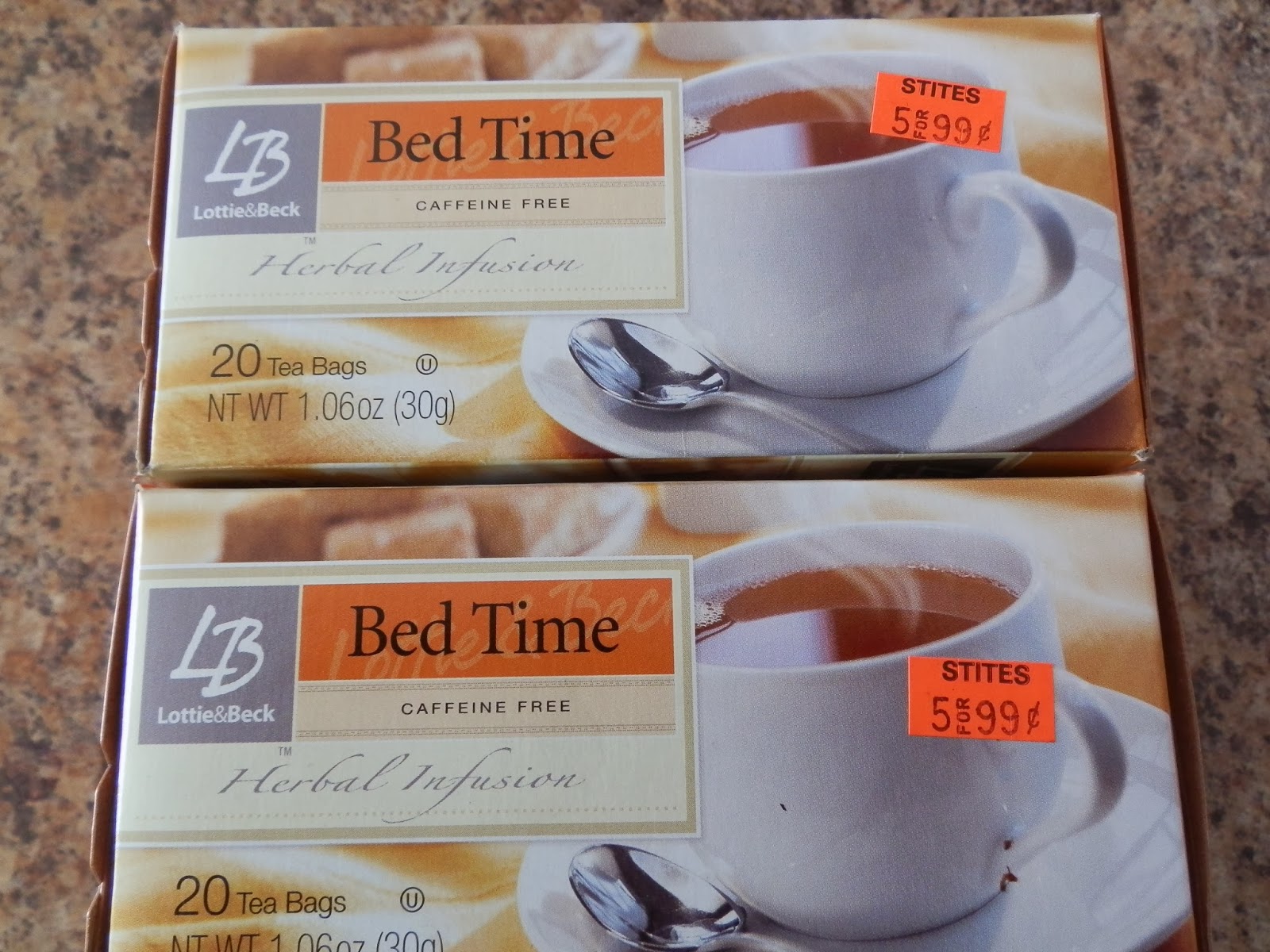
Lottie + Beck Bed Time Tea, 20 pack...2 @ $.20


Temptations cat treats, 3 oz...3 @ $.99
Goodlife cat treats, 3 oz...3 @ $.99
Hartz Crunch 'N Clean cat treats, 3 oz...4 @ $.25

Simply Green toilet paper, 100% recycled...16 @ $.99

Cologne...1 @ $1.99
Reusable cold drink cups and straws, 2 pack...1 pk @ $4.99
Utility lighter...1 @ $.79
Ball pint canning jars with lids and bands...6 @ $.33 (Trucker found these! Best deal I've ever found on canning jars)
Bathroom rug...1 @ $2.99


We also bought some bulk assortments: 2 bags of snacks/misc items for $3.99 each and 3 bags of seasoning packs for $.99 each. Within those bags we got:

Lifesaver mints...95
Kit Kat snack sized candies...13
Fruit gummy snack packs...27
Russell Stover candies...2
Ferro Rocher chocolates...3
Candy toys (novelty candy dispensers)...3
Instant oatmeal...3 packs
Caribou Coffee K cups...5
Starbuck's Via packs instant coffee...6
Cake Mate Writing gel...1
Moon Pies...16
Odwalla granola bars...32
Quaker fruit and nut bars...4
seasoning packs from salad dressing to grilling to canning mixes...73


We bought the snack/misc bags for the granola bars that we use when hiking and the seasonings bags for the canning/grilling seasonings. A lot of those items will be given to someone who uses them. We don't have a Keurig coffee maker, and I don't know anyone who does, so I just opened them and dumped them into another coffee container.


Our total purchase was $127.32. To see how much I saved, I added up the sale price that I would feel comfortable paying at my regular grocery store for just those items that I would actually buy (so the Keurig cups, moon pies, etc are not included). The price I would have paid at my store was around $265. This trip saved me $138. Also, for some items, I got more variety, or a higher-end product. For example, the salad dressing, I compared paying $1 for store brand dressing, but the store brand that is $1 at my store has only 4 varieties. For our coffee, we buy basic store brand, or whatever is on a good sale, but we love it when we get the coffee and chicory blend for about the same price per ounce.

Do you ever shop at salvage groceries? Love them? Hate them? Any great scores you'd like to share?


Shared on:

Homemade Mondays

Monday, October 21, 2013

Grocery Shopping Primer

For those just striking out on their own, or who are for the first time trying to get their grocery budget under control, here is a crash course in grocery shopping. The tips below can help you spend less while getting healthier, tastier food.

First, all the basics everyone already knows: don't shop hungry, avoid bringing along the kids, pay attention, avoid impulse buys.

Always shop with the sales paper. When I get my sales paper, I highlight any items that are a good price, and that we need. If apples are on sale for $.54 a pound, I plan on picking up some for snacks, baking, applesauce or even to freeze or dehydrate to use later. If pasta is on sale for $.75 a box, I circle that and plan on buying a lot. If you don't receive the sales paper in the paper or mail, grab it when you get to the grocery  or check online.

Make a list of items you definitely need and try to stick to it as much as reasonable possible. You don't want to just waltz in and throw whatever looks good at the moment or you'll end up with lots of snacks and sweets, and spend a lot more than you budgeted. On the other hand, you don't want to be so rigid that you pass up a fantastic deal on an item you regularly use just because it wasn't on your list. Some people also find great value in making a meal plan around the best sales in the paper, and this is especially good for those who have very busy schedules so you can avoid the after-work "what's for dinner?!?!" panic.

Shop first at the cheapest grocery store you can, then work your way to the more pricey ones to get anything that you can't find at cheaper venues. About every three months I shop at a really good salvage grocery and stock up on whatever they have at a good price, usually breakfast cereal, salad dressing, pasta, and juice. I save weekly for this grocery trip and plan to stock up on three months worth of food to get me through to the next trip. It's an hour away, so if I lived closer I'd shop more frequently. I often shop at Aldi or similar discount, no-frills grocery store. That's the best way to buy dairy, eggs, baking supplies and canned soups and veggies. Sometimes I shop at Kroger, Meijer or similar big grocery store chain. I get everything left on my list after the cheaper stores.

Sometimes bulk purchases save lots of money. Sometimes they don't. Sometimes generic brands are a fantastic deal, other times they're the same price as name-brand. So always, always, bring a calculator (this is the one benefit to everyone always having their cell phone on them). Divide the price for the item by the units of the package (pound, number, ounce, etc). Check this for the big package and the small package, the generic and the name brand. In this way you'll know which item is actually the cheapest, and can purchase accordingly.

Generic is often just as good as name brand, but not always. Especially for things such as salad dressing, the recipe may be better with one brand than another, or there may be a limit to selection in the generic (then again, since when do we need 30 different varieties of ranch dressing?). However, do try the generic. If you like it, you'll likely save a lot of money over the long haul. If you don't, you're probably not out much money. If you have a bad experience with one store or knock-off brand, try another. Items such as white sugar are the same regardless of brand. Buy the cheapest per pound. Regular all purpose flour is pretty much the same. Differences in flour come with buying bread, cake or other specialty flours, and are really not a big concern for the casual home baker. I'll bet your kids won't hate you because your cake was just moderately fluffy instead of being extra fluffy.

Clip coupons with caution. I use coupons sometimes, but not nearly as much as I used to. Coupons are often for snacks or convenience foods that aren't the most nutritious. This isn't always true though. I do clip coupons for juice, pasta, breakfast cereal (Trucker's guilty pleasure snack food), and condiments. Clip coupons only for foods you enjoy eating and that are nutritious (at least reasonably so). When you look over your sales paper, match coupons to sales and mark that on the sales paper. Sometimes you'll find that Barilla pasta is on sale for $1 a box, and you have a coupon for $.50 off two boxes, making it $.75 a box. Always bring all of your coupons with you so you can match the coupons with unadvertised sales or clearance items.

Before you shop anywhere else in your grocery store, check the clearance bin. If the item is nearing it's sell-by date, has damaged packaging, has old-design packaging, or is a discontinued variety, it is marked down, often 25-75%. Some stores have better deals than others, but it's always worth checking. See if you have any coupons for any of the items. If so, subtract the coupon value from the clearance price, divide by unit and compare to regular priced items (sometimes the clearance mark down isn't that great and won't be better than generic, even with the coupon).

Bread that is labelled "whole grain" or "whole wheat" is almost certainly not. It just has some whole grain or wheat added, and legally that's a-okay. The only way you can be sure it is completely whole wheat or grain is if it says "100% whole wheat" or "100% whole grain". "Wheat" bread is just a lot of white flour with a bit of bran thrown in and maybe some dye. Don't pay extra for the same basic product.

Store-brands of pasta are usually satisfactory and a great bargain compared to national brands. Many stores even offer whole grain pasta that is only nominally higher than their white pasta. Whole grain pasta is more healthful and filling that white pasta, so it is a great deal. Those pastas that have veggies mixed in are usually a lot more expensive, and I doubt that they are that much more healthful. Buy them if you find a great deal, but don't expect them to change your health.

Pasta sauces vary greatly brand to brand, but some of that can be overcome in cooking. Add seasoning to jazz up a bland sauce. A thin sauce can be cooked down to evaporate some of the extra water yielding a thicker sauce. Do experiment with all of the brands in your price range. There are three different brands that I like, and I buy whatever is the cheapest of those three.

If you buy canned soup, buy concentrate when possible as this is usually a better deal. If you dilute the concentrate with a can of water, halve the price per ounce when comparing the price to full-strength soup. Discount grocery stores usually have satisfactory canned soups in the basic varieties (chicken noodle, bean, tomato, chicken rice and beef vegetable).

Avoid baking mixes. They really don't save that much time and usually cost a heck of a lot more. Also, they lock you into baking whatever mixes you have in the cupboard instead of getting creative with what you have.

Ultra-pasteurized homogenized milk is ultra-pasteurized homogenized milk. Don't pay extra for one brand over another. However, raw milk, organic milk, goat's milk, lactose-free milk, or non-homogenized milk may very well be worth paying more for and is a higher quality product.

Be wary of labels on eggs touting "cage-free" "free-range" or "vegetarian fed". These are tricky labels. "Cage-free" may mean that a thousand chickens are crammed in a building with no access to the outside, but no bars. "Free-range" may mean that the hens are allowed access to a little dirt-patch, but never do because their first few weeks of life they were cooped up inside "for safety" and are now afraid to go out. "Vegetarian-fed" is pretty much a guarantee that those chickens never saw the outdoors. Chickens are omnivores and adore insects and mice. If they see a bug, they are eating it. If they are guaranteed vegetarian-fed, it means they weren't allowed outside and were fed a diet of grain. If you're going to pay extra for eggs, buy from a neighbor or local farmer you know.

Check the clearance meat section for marked down meat. When the package is a few days from its sell-by date, it is often marked down 25-50%. Buy what you can use within a day or two, or freeze for using later. Sometimes the deals are fabulous. Once I found ground hormone-free, pastured beefalo for $2/lb. I bought all they had and froze to use all summer long. When turkeys go on those wonderful deals around Thanksgiving (or hams around Christmas or Easter, or corned beef around St. Patty's), buy one or two extra. I love to pull a turkey out of the freezer in February and roast it, then package it into meal-sized portions (chunks for stir-fry and casserole, shreds for omelets, sandwiches or soups, and cook the carcass down for stock).

Most importantly, the grocery store is not the only place to buy groceries. It's also not usually the best, nor is it the cheapest.

Bakeries can be expensive, but they offer a very high quality product. Sometimes you can find a bakery that is outrageously cheap. One of my favorite bakeries in Chicago sells sub rolls for $.33 apiece and mini cookies 5 for $1. Ask your baker how long they ferment their bread before baking. The longer ferment times means that the bread is better for those with a gluten sensitivity or blood-sugar issues. At many bakeries, you can also find individual rolls (which are often great for sandwiches) or small loaves of bread so you can avoid waste if you're buying for one or two. (If you do have stale bread though, check out this article for ways to use it up)

Farmers markets can be very expensive if you just go in and buy whatever looks good (hint: it all does). If you eat very seasonally, it can be the best deal around. Once at the height of the tomato harvest, I saw a sign advertisting canning tomatoes 50 pounds for $25. Someone asked the farmer what made them canning tomatoes. He said, "Everyone here has tomatoes for sale. This is the only way I can move a lot of them." They were perfect tomatoes at a perfect price. My favorite farmer sells peppers at these prices: small cherry bomb hot peppers 5 for $1, jalapenos 5 for $1, hungarian wax peppers 4 for $1, green bell peppers $.5, red/purple/orange/yellow/black bell peppers for $.75. Another sells small hot peppers $.10/each and small sweet peppers $.15/each. Compare this to the grocery store that sold green bell peppers for $1 and red or yellow bell peppers for $1.50. When zucchini are in season, I often find them 4 for $1. When you find prices like these, stock up and preserve for later (shred and freeze zucchini for baking, dehydrate tomatoes or can sauce, freeze or dehydrate peppers, make pickles out of cucumbers, and puree cooked pumpkin for pies and muffins all winter long).

If you live in farm country, farm stands are great. You get great bargains and the items are very fresh. You also get to peek at the farm and talk with the farmer, two vital steps for responsible eating. You get to support a small farmer and thus save the world from Monsanto, and you keep the money in your community. So many wins.

If a neighbor sells produce in a little stand in their front yard, go nuts! These hold the best deals I've found on produce anywhere, except for growing it myself. I often find tomatoes, peppers, eggplant and winter squash for $.50-.75 each and cucumbers and zucchini for $.25. Again, you're keeping the money in your community and supporting cottage industry.

If eating pasture-raised meats, organic produce or raw milk is important to me, going through small farmers or homesteaders is the best way to go. For raw milk, it's the only way you can get your hands on it. For eggs, I pay $1.50-2.50 a dozen when buying from a small "hobby" farm, versus paying $7-8 through other venues for a similar product. Buying a share of a cow, pig, goat or sheep is often the best way to be able to get pasture-raised/hormone-free/organic meat at a price that's realistic for working and middle class families. You can even go in with friends or family members for a more manageable price and quantity.

Ethic grocery stores are almost always cheaper than grocery stores for ethnic foods. The price differences are astounding. At the grocery store, an 11 oz bottle of sweet roll sauce is $2.79 or more. At my Asian market, a 32.5 oz bottle is $3.25. White rice is over $2 for a pound bag at the grocery, but I just bought jasmine rice at the market for $12 for a 10 pound bag (50 pound bags are an even better deal, so next time I'm going to split a bag with family members). You can also find veggie varieties that the grocery doesn't offer for the same price or less than the same-ol-same-ol varieties at the grocery. Latino grocers are great for finding the less common parts of the animal. My favorite sells chicken feet for $.20/pound so I can make killer stock.

Talk with your local butcher about buying meat from the animals that people dropped off, but never picked up. The butcher often can't sell the meat, so you just pay the processing fee. This is common during deer hunting season. I get a whole deer for around $80.

If you have a bit of space, whether in the backyard, the patio or a windowsill, grow some of your own food. Seeds cost a penny or less. If you limit your inputs of store-bought chemicals, and instead compost your kitchen and yard wastes to make your own fertilizer, you can get practically free food. A penny for a seed, plus 10 cents worth of potting soil, put into a repurposed container such as a coffee cup, turns into a tomato plant that provides 4-10 pounds of tomatoes for your family. Lettuce is really easy to grow, and right now I'm even growing several pots on a sunny windowsill to add to salads in winter.

As you shop, work towards building a stockpile of food at the lowest price possible. Buy non-perishables in large quantity when the price is low. Pull the old ones to the front and put the new ones in back so nothing goes bad. Freeze, can or dehydrate produce when it's in season to use when it is out of season so has to be flown in. Freeze meat in meal-sized portions whenever you find a great price. Eventually you'll be buying not for the week's meals, but to replenish your pantry. At that point, you never have to pay full-price, you can just eat from the pantry while you wait for the next great sale.

Monday, August 19, 2013

Dehydrating Peppers

I use a lot of peppers in my cooking, especially in winter when I make lots of soups, stews and chilis. During the winter, however, peppers are ridiculously expensive and the quality is terrible. Instead of just settling for crappy, expensive peppers, I dehydrate wonderful and cheap peppers during summer to use all winter long. Dehydrated sweet peppers make a wonderful snack, especially for road trips or hiking. Peppers can also be added to eggs, casseroles or pasta dishes.

Last night at a farm stand, I found beautiful Hungarian Wax peppers for $1/3 and jalapenos for $1/5. Sometimes I find peppers on the clearance rack at the grocery store 4 bell peppers for $1 or a 5 lb bag of hot peppers for $2. If you get a bumper crop of peppers in your garden, dehydrating is a perfect way to stretch your harvest with minimal expense or space.

First, clean the peppers well, and dry. Trim off the stem and any bad spots and cut out the seeds and membrane. I cut small peppers into rings and larger peppers into thin strips. You could cut them into chunks or thick strips, but you won't be able to fit as many on a tray and it will take much longer to dehydrate.

Lay them out evenly over your dehydrator trays and dehydrate for 6-18 hours, depending on types of pepper, size of pieces, humidity, etc. When they are fully dry, they will crack easily when squeezed and clatter when you stir them.

I reuse food jars left over from pasta sauce, pickles or relish to store my dehydrated food. I have stored dried peppers for several months without noticing any loss in quality. If you wanted to save food for a longer term, add oxygen packs, vacuum seal or oven can the peppers. 

You can snack on them (drink plenty of water if you regularly snack on dehydrated food). You can rehydrate them by pouring boiling water over them for about 20 minutes. If you are making soups or chili or a slow cooker meal, just add them to the dish dehydrated, and simply add a bit more water than the recipe calls for.


Republished on: Homegrown.org
The Homesteaders Blog HopShared on: 


Sunday, June 9, 2013

Use it Up: Cake Pops!

Many things are tossed into the garbage can when they still have lots of good life left in them. Use It Up is a section on how to use this "trash" to make new, useful items for your home or to re-purpose items to avoid a purchase.

My sister's graduation party is today and I wanted to be able to bring some kind of dessert. I didn't want to spend a bunch of money, but I wanted to bring something nice. I am also taking a Use-it-up challenge with some online friends to try to eat from the freezer and pantry to use up items that have been taking up space too long. Also, it's a terrible thing to have to throw away cakes, cupcakes, muffins or scones that get dry or stale before you use them. Solution: Cake pops!  These cheap, easy desserts are delightful and give new life to lifeless sweets.


I had tons of icing in the pantry that I got awhile back for $.20 per tub using a sale and coupon. I had lots of different sweets in the freezer. When I make a batch of cupcakes or scones at home, I always end up making more than Trucker and I can possibly eat between the two of us. I tend to put them in the freezer and forget about them.

I dug out a lot of those sweets: orange scones, toffee ginger scones, chocolate cake, and white cupcakes. Once they thawed, I crumbled them up. I mixed in just enough icing for it to all stick together into one mass. I rolled small amounts into little balls and popped them in the freezer overnight (they really just need to be frozen for at least two hours, but if you have plenty in the freezer, you'll have a quick and easy snack on hand). I stuck each one with a toothpick.

I took a bag of chocolate chips and melted it in the microwave. I added about a tablespoon of veggie oil. This made the chocolate a lot better for dipping, as otherwise it is really thick. I dipped each cake pop into the chocolate and then placed on a piece of waxed paper (in this case, a repurposed cereal bag). After dipping each ball, decorate if you'd like with sprinkles or other decorative bits. For the orange scone pops, I topped each with a tiny piece of dehydrated orange zest.

They are delicious and I think they're going to go over very well at the party this afternoon. Better yet, it used up items I had in the freezer and pantry, so the only out of pocket cost was for the chocolate.

Shared on:

p>Homestead Barn Hop
Wildcrafting WednesdayThe Chicken ChickTTF CoHost 1
Related Posts Plugin for WordPress, Blogger...