Saturday, February 22, 2014

Use It Up: Orange Syrup


Many things are tossed into the garbage can when they still have lots of good life left in them. Use It Up is a section on how to use this "trash" to make new, useful items for your home or to re-purpose items to avoid a purchase.


Whenever I eat citrus, I dry all those peels, knowing that someday, somehow I'll use them. Today I found that use. I was making homemade syrups and wanted to try some new flavors. An AHA! moment! What about an orange syrup for teas, coffees, drizzling over desserts, or mixing with sangria?


I made a simple syrup using one part white sugar with one part water. I put it in a saucepan on medium heat and stirred it together until the sugar dissolved. I dumped in some orange peel pieces and let it simmer. I stirred it often so that it didn't burn and heated it until it thickened and the volume had decreased by about a fourth. I let a spoonful cool and tasted it. Perfection. I strained the orange peels and was left with a bright, cheery syrup.

 I was about to dump the spent orange peels into the compost container when I decided to taste one. It was incredible. Sweet, bitter and citrusy. I nibbled on them as a snack throughout the day. If I have any left the next time I make orange scones, those will be a perfect add in. They would also be nice in cranberry orange muffins, on top of ice cream (especially a sunday drizzled with the orange syrup!), in oatmeal or in pancakes.


Shared on:
simple saturdays 300 final
13 Heritage Homesteaders Hop #1Homestead Barn Hop
Wordless Wednesday HopThe Chicken ChickThe Self Sufficient HomeAcre

Monday, February 17, 2014

Salvage Grocery Shopping

Want to save money on groceries? Like keeping perfectly edible food from going into the landfill? Want to have an adventure while grocery shopping? Check out your local salvage grocery!


Salvage groceries buy closeouts from other stores, so there is no guarantee of what you'll find. Sometimes the selection is awesome, other times it's lacking. The items are either discontinued items, items with changed packages (say, 12 oz packages left over after the company starts making 11.5 oz packages), dented cans or boxes, seasonal items, expired products or items leftover when a store closes. My favorite salvage store gets items from health food stores, so I find lots of organic products for a price comparable to Aldi. Overall, the prices are better than the sales price at the chain groceries in my city, and sometimes I get incredible prices. I am able to buy "higher end" products than I would otherwise be able to afford. These items would likely be thrown away if it weren't for salvage groceries, so I like knowing that by shopping there, I'm keeping perfectly good food from being destroyed (When I worked at a grocery store, management made us throw all dented items into the garbage, and lock the dumpster to keep people from diving it). Plus, I never know what I'll find, so it's an adventure, or at least as close as grocery shopping ever gets.

Now for the warnings. Know your prices. Some things cost more at salvage stores than the sales prices at the chain grocer. Check the packaging. Dented cans are probably okay if it's a small dent that isn't on the lid or seam, but pass up badly dented cans or anything that is rusted, leaky, missing a label, or otherwise looks suspicious. Don't buy boxes or bags that have been torn open and taped back together. Check packets/bags to see if they are sealed or if there are tears. Check the expiry dates. As many articles lately have shown us, "use-by" or "best by" dates are more of suggestions than rules, but it's probably best to avoid anything with an expiry date of 2008. Buy things you eat; don't buy something you don't like just because it's an awesome price.

Here's the list of items that I found on my latest trip:

Cascadian Farm Purely O's cereal, organic...2 @ $.79
Barilla spaghetti...1 @ $.59
Agave nectar...1 @ $1.99
King Arthur Self Rising Unbleached flour...5 lbs for $.99
Tollhouse White Chocolate Chips, 24 oz package...1 @ $1.99
Corn tortillas, 10-12 packs...8 @ $.10


Vlasic Roasted Red Peppers...4 @ $.49
Mrs. Sassard's Bread and Butter Pickles...1 @ $.99
Chipotle salsa...1 @ $.99
Wolfgang Puck Marinara...1 @ $.99
Colavita Spicy Marinara...1 @ $.99
Le Roselli's Spaghetti sauce...1 @ $.99
Diced, fire-roasted tomatoes...1 @ $.59
Smuckers Triple Berry Topping...1 @ $1.59
Smuckers Peach Preserves...1 @ $1.59
Jif Hazelnut Chocolate spread...6 @ $1.49

Kraft Mayo, fat free...2 @ $.39
Kraft Mayo...1 @ $.79
Miracle Whip...3 @ $.99
Hellmann's Mayo...1 @ $.39 (Yes, I am aware this is a lot of mayo. We had depleted the pantry supply so it was on our list, and both of us tossed some into the cart without the other realizing it. We are re-homing a few jars to someone who can use it)
Kraft Creamy Italian dressing...1 @ $.20
Kraft Ranch dressing...1 @ $.20
Ken's Steak House Chunky Blue Cheese dressing...1 @ $.20
Kraft Thousand Island dressing...2 @ $.10
Wishbone Buffalo Blue Cheese dressing...1 @ $.99
Tony Chachere's Spicy Sweet Sandwich Sauce...1 @ $.89
Kraft Sweet and Sour sauce...1 @ $.79
Peppadew Mustard sauce...1 @ $.79


Wolfgang Puck Creamy Tomato soup, organic...1 @ $.69
Wolfgang Puck Chicken and Wild Rice soup, organic...1 @ $.69

Jerky sticks...2 @ $.49
Gum, 3 packages of 15 pieces...1 @ $.99
Craisins...1 @ $.99


8 o'clock coffee, 24 oz package...1 @ $6.99
8 o'clock coffee, 12 oz package...1 @ $2.49
Folger's Vanilla Biscotti coffee, 10 oz package...1 @ $2.49
Chock Full O Nuts coffee, 11.3 oz package...1 @ $2.49
Maxwell House coffee, 11.5 oz package...1 @ $2.49
CDM Coffee and Chicory, 13 oz package...1 @ $2.49
Seattle's Best Coffee, 12 oz package...1 @ $2.49
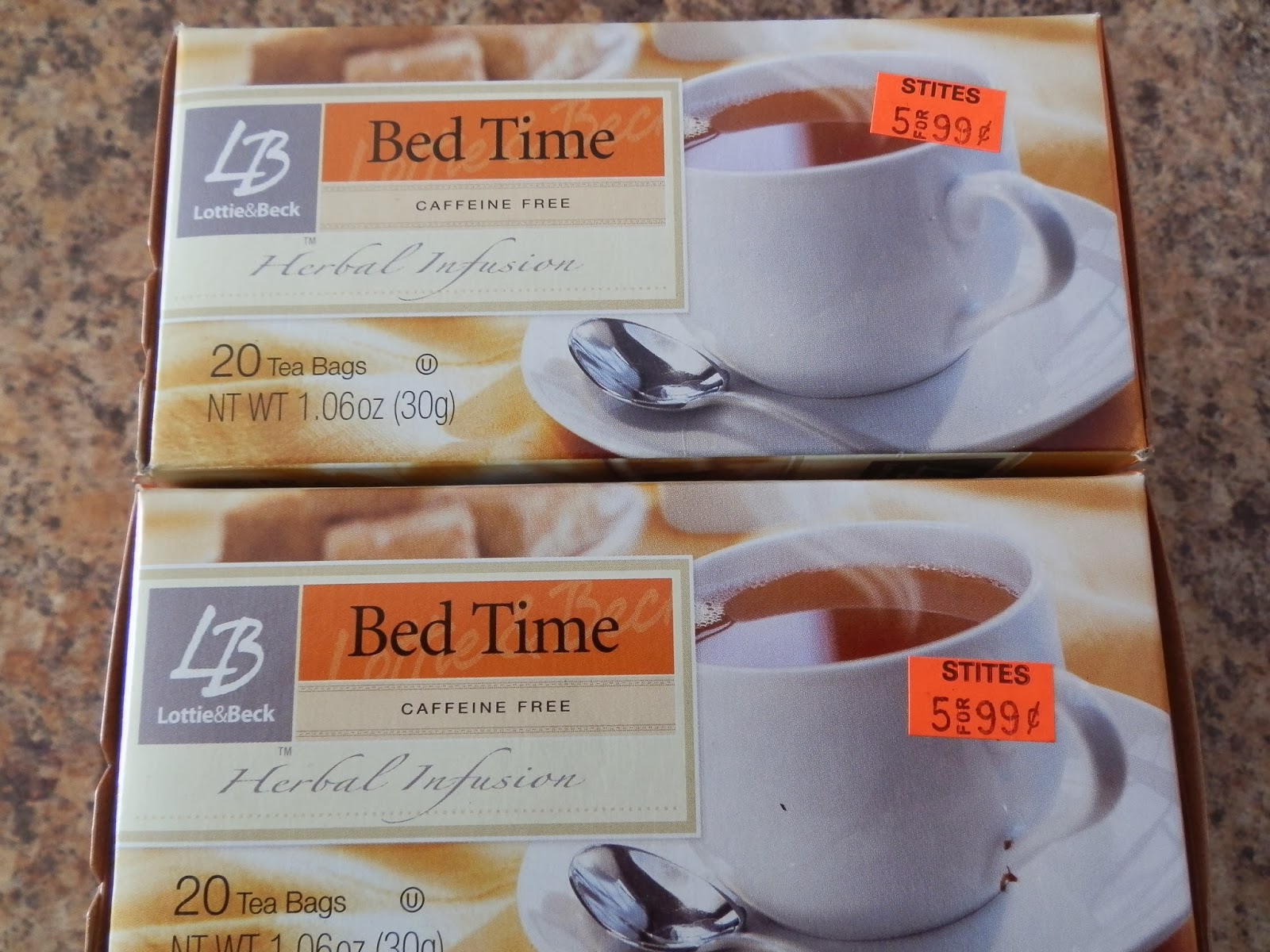
Lottie + Beck Bed Time Tea, 20 pack...2 @ $.20


Temptations cat treats, 3 oz...3 @ $.99
Goodlife cat treats, 3 oz...3 @ $.99
Hartz Crunch 'N Clean cat treats, 3 oz...4 @ $.25

Simply Green toilet paper, 100% recycled...16 @ $.99

Cologne...1 @ $1.99
Reusable cold drink cups and straws, 2 pack...1 pk @ $4.99
Utility lighter...1 @ $.79
Ball pint canning jars with lids and bands...6 @ $.33 (Trucker found these! Best deal I've ever found on canning jars)
Bathroom rug...1 @ $2.99


We also bought some bulk assortments: 2 bags of snacks/misc items for $3.99 each and 3 bags of seasoning packs for $.99 each. Within those bags we got:

Lifesaver mints...95
Kit Kat snack sized candies...13
Fruit gummy snack packs...27
Russell Stover candies...2
Ferro Rocher chocolates...3
Candy toys (novelty candy dispensers)...3
Instant oatmeal...3 packs
Caribou Coffee K cups...5
Starbuck's Via packs instant coffee...6
Cake Mate Writing gel...1
Moon Pies...16
Odwalla granola bars...32
Quaker fruit and nut bars...4
seasoning packs from salad dressing to grilling to canning mixes...73


We bought the snack/misc bags for the granola bars that we use when hiking and the seasonings bags for the canning/grilling seasonings. A lot of those items will be given to someone who uses them. We don't have a Keurig coffee maker, and I don't know anyone who does, so I just opened them and dumped them into another coffee container.


Our total purchase was $127.32. To see how much I saved, I added up the sale price that I would feel comfortable paying at my regular grocery store for just those items that I would actually buy (so the Keurig cups, moon pies, etc are not included). The price I would have paid at my store was around $265. This trip saved me $138. Also, for some items, I got more variety, or a higher-end product. For example, the salad dressing, I compared paying $1 for store brand dressing, but the store brand that is $1 at my store has only 4 varieties. For our coffee, we buy basic store brand, or whatever is on a good sale, but we love it when we get the coffee and chicory blend for about the same price per ounce.

Do you ever shop at salvage groceries? Love them? Hate them? Any great scores you'd like to share?


Shared on:

Homemade Mondays

Monday, January 20, 2014

2014 Garden Plans and Goals


Well, I've gone and done it. Yesterday I started my onion seeds and planted a few more pots of lettuce and spinach to grow indoors. Now the garden is all I can think of. I find myself throughout the day wandering to the patio door and looking out over the back garden. It's still covered in snow, but I can still see the hugelbeet that I put in a low spot in the yard. I'm reading blog posts and watching Wisconsin Vegetable Gardener videos. I'm fantasizing about ripe tomatoes that practically fall off the plant into your hand.

To keep myself from going crazy, I've been planning. Here are my plans and goals for the coming garden season.

* Expand the gardening space. There is a large area in the back yard under a tree that has grown up in weeds. That area will be dug up and planted in lettuce, since it's mostly shaded and not much else will grow there. I'll dig at least one more garden bed in the main garden.

* Venture into the wonderful world of edible landscaping. The previous owners endowed us with incredible perennial flowers. They really did an awesome job; there's always something blooming. However, the strip between the driveway and hedges is a bit sparse. I plan to sneak in some Rainbow swiss chard, some frilly red lettuces, Burgundy okra, and chives. At a going-out-of-business sale I found giant matching planters for $5 each. I will put one on each side of the driveway by the street. I plan to plant a Burgundy okra (thriller) in each, surrounded by a lime green and red speckled lettuce (filler) with Milkmaid Nasturtiums (spiller).

* Start a reasonable number of transplants. Last year I assumed I would kill almost all of my seedlings. So I over-planted. I had hundreds of tomato seedlings (around 300), 50 peppers, 50 eggplants. Definitely didn't have enough space for that many (Although it was wonderful to supply my parents with all they needed and to walk around the market I work at and give people free seedlings). This year I will start a more reasonable number, and also start some kale, lettuce, basil, etc seedlings to get a jump start on the cool season.

* Get a longer harvest. Get some cold-hardy goodies in early, and keep on planting season appropriate plants until August or September. This past year I didn't start getting a harvest until the end of May, and I'd like to get some early spring greens this year.

* Plan the garden well, and keep planting to fill in spaces as needed so there isn't a lot of wasted space like last year. I have over 100 veggie and herb varieties, and multiple packs of some of them; there is no fear of running out of seeds. I can plant with abandon.

* Dehydrate lots of yummy things for teas. I enjoy herbal teas so this could save me a lot of money over the year. Last year I dehydrated a fair amount of violet leaves and flowers, as they grow over most of the lawn. This year I plan to dehydrate some herbs I'm planting, as well as some "weeds" that are good in teas. I'm still debating about mint. I adore mint teas, but I know that it is invasive.

* Plant a heck of a lot more lettuce. I had some failures in the garden last year, and chalked most of them up to beginner's lessons. The thing I can't forgive myself for is how little lettuce I grew. I planted it later than I should have, didn't plant nearly enough, and then tried to plant most of it when the weather was too hot. Nothing germinated in the summer. Then for some reason, instead of planting a bunch for fall harvest, I planted lots of radishes and beets, but no more lettuce. We ate a few salads a week for a couple months. Not this year. This year I'm eating lettuce until it comes out my ears.

* Not waste a bit of the produce grown. I have a fancy new dehydrator, and I am hoping to learn how to can this year. Put up as much as I can for the winter. If I get a glut of something that I don't want to can, dehydrate and powder it to add to my veggie powder jar.

* Here is a rough list of what I'm growing this year: two types of eggplant, 3 sweet peppers; 4 hot peppers (including Jamaican Hot Chocolate Habaneros!), 7 tomatoes (inc Black from Tula and Brandywine), 3 types of cucumber (including Crystal Apple), 5 beet, 3 swiss chard, 4 types carrots, turnips, 10 types radishes, 5 types of beans (including Scarlet Runner and Calypso/yin-yang beans), spinach, kale, mustard, 10 types lettuce, chives, cilantro, 3 types of basil, onions, Burgundy okra, milkmaid nasturtiums, and more random things that I may or may not plant. Whew.

What are your plans and goals for the garden? What are you growing?

Shared with:

Homestead Barn Hop
From The Farm Blog Hop13 Heritage Homesteaders Hop #1

Sunday, January 19, 2014

Weird Composting

I compost as warfare. The battle is against climate change and landfills and big business that promises to solve all of our problems if we just open our wallets. Our consumptive society buys with abandon and then throws "away". Composting fights this mindset and creates a new one.

I compost because it's free. I don't have to work at my job to earn the money for fertilizer in my garden (and the work of composting is actually meditative and pleasant). I don't have to throw away organic matter. I don't have to run the trash down to the curb every week (I take it down once a month, and even then it's not full).  I am not contributing to the landfills as much as I would be otherwise. I am building the organic matter in my soil instead of just taking from it. I am connected to my soil and my compost bin. I think about what I am disposing of instead of mindlessly filling the garbage tin. I think about every item that is thrown away, and as a result I become horrified by how much packaging stuff comes in. Even though I can't compost plastic, thinking about the plastic that has to be recycled makes me want to buy fewer things or opt to buy from a thrift store and remember to carry a tote bag just so I don't have so much plastic! When I have to look at food that goes bad before I eat it, I am more mindful to not waste food.

Everyone knows you can compost kitchen scraps and leaves. There are so many more things that can go into the compost bin. It may not make for perfectly balanced compost, but the way I see it, if I have organic matter at my disposal, it should go into my soil, not into a landfill. Here's a list of some of the weird things I've started putting into my compost.

* Toilet paper tubes. I just cut them up a bit.
* Newspaper. Shredded, it is the perfect "brown" for winter when I have a shortage of leaves and dried grass.
* Coffee grounds and filters.
* Tea and tea bags.
* Paper grocery bags, shredded.
* Coffee cups, cut up. Some coffee cup lids are compostable.(I almost always have my reusable mug, but every now and then I forget it).
* Grocery lists, recipes that I jot down, torn up.
* Cardboard egg cartons. I purposely opt for cardboard over styrofoam for just this reason.
* Dryer lint.
* Dustpan contents. After I sweep the floors, I dump the contents into the compost (exception: when I've broken glass). Dust is just a hodgepodge of human skin/hair, pet dander/hair, dirt, pebbles, dead insects, food particles, etc.
* Pet hair.
* Hair trimmings (Occupational benefit if you're a hair dresser?).
* Yarn trimmings, cotton or wool. I use larger pieces of yarn for making scrapghans, but for pieces under 6 inches, they go into the compost bin.
* Old washclothes/dish towels that are too ragged for the rag bin.
* Paper towels/napkins or kleenex. Eventually I will be 100% paper free (as it is I only buy a roll of paper towels about 2-3 times a year), but til then, it goes into the compost.
* All kitchen wastes other than meat or grease. Bones that are soft after making a couple batches of stock go into the compost. Bones can also be buried deep into the garden bed to decompose without fear of animals digging them up. Egg shells are awesome for tomatoes.
* Finger/toenail clippings.
* Dead floral arrangements and dead leaves from houseplants.
* Junk mail, shredded.
* Old financial papers that no longer need to be saved. Cut or tear these into small pieces and use as a brown in your compost. The added bonus is that would-be identity thieves aren't going to look in your compost bin.
* Pizza boxes, cut up.
* Cardboard Q-tips, cotton balls.
* Wine corks.
* Stale herbs/spices
* Moldy bread, on the rare occasion it molds before I dry it for bread crumbs.
* sales flyers
* Neighbor's yard waste. (Only if they aren't sprayers)
* Ragged cotton or wool clothing. Socks, underwear, t-shirts, etc. Remove any metal or elastic from the clothes and cut it up as fine as you feel like.

What weird things do you compost?

Shared with
Homestead Barn Hop

simple saturdays 300 finalThe Self Sufficient HomeAcre
From The Farm Blog Hop13 Heritage Homesteaders Hop #1The Chicken Chick

Sunday, January 5, 2014

Preparing for an Uncertain Future

It is so easy to plan for the future when we have a clear picture of what lies ahead. I've found that I always have an easier time saving money when I know what it's for. When I don't know what exactly I'm saving for, it makes it a little too easy to spend money on non-essentials.

Of course, nothing is ever set in stone. I bought my house a year later than I was planning because the car gave up the ghost and I used part of my down payment money to buy another. I'm still waiting on a couple repairs on the house because...life happened. We rarely see the lay-offs coming, or the recessions (or we underestimate them), or the illness, or the death in the family, or the fire...However, these are the situations that we need to prepare for, even while hoping they don't happen.

First, as you've read in every personal finance book everywhere, build up an emergency fund. When you hit a bump in the road, it helps to have something to fall back on. Even if you can only build a modest balance, it can help you overcome the unexpected, such as an illness that leads to a tiny pay check. Keep the money in a savings account so you can easily access it and it isn't at high-risk of being lost.

Keep food in the house. I'm always surprised at how many people have to shop for groceries every week because they only have enough food for that week's meals. It makes sense to have at least a modest stockpile of food. Winter storms can make it dangerous to drive to town, or even a couple of miles to the grocery store. If you get sick, it is comforting to have food at home so you don't have to get dressed and drive to the store. In case of job loss, a stocked pantry can be a life saver, giving you the comfort of knowing you can feed your family while you continue to look for a job.

Learn new skills that are of multiple benefits. Gardening is a fun and relaxing hobby, but it can also supply food in times of crisis. If you lost your job, you could use your gardening skills to bring in a little extra money by tending garden for people on vacation or older people. Cooking from scratch is enjoyable, allows for maximum variety, is usually healthier, and can save you a load of money. Foraging is fun, but can provide medicine and food in both times of plenty and of need.

Hone your frugal skills before you need them. If you suddenly find that you must be frugal, you can not only feel frustrated but overwhelmed. Practice frugal tactics before a financial crisis so you can easily amp up your frugal practices when needed. Learn to cook from scratch. Learn how to darn socks and do basic clothing repair. Learn basic car maintenance.

Take the occasional No-Spend Challenge. You go for a set amount of time without spending money, whether for a weekend or a month. You save the money you would have spent. You also learn so much. You learn how to make pizza at home, how to substitute ingredients in recipes. You experiment with new coffee flavors by adding spices from the spice rack. You learn that you're spouse is awesome at Scrabble (or terrible). You learn how much you love taking walks around the neighborhood or find that you really enjoy biking to work. Most importantly, you learn that you can survive without spending money. Over the next few months, you find that you don't spend as much, because you know how to have fun without spending money. If a time comes when you lose a job, or you have a massive medical bill that requires a large chunk of your income, you can easily go back to your spending-free or reduced-spending ways to make it through.

Featured on:


Shared with:
Homestead Barn Hop13 Heritage Homesteaders Hop #1


Monday, December 9, 2013

Use It Up: Breadcrumbs

Many things are tossed into the garbage can when they still have lots of good life left in them. Use It Up is a section on how to use this "trash" to make new, useful items for your home or to re-purpose items to avoid a purchase. 

I'm always surprised (horrified) when someone at the bakery asks if they can buy bread crumbs. Using bread crumbs is supposed to be a way to use up the crumbs that break off the loaf while you're cutting a slice of a good rustic bread, or a way to use bread that has become hopelessly dry. Not something you buy.

Whenever I have bread that gets hard and dry (the bread I eat is preservative free, so there's often a good 1/4 of the loaf that gets dry before I can get to it), I cut it up into cubes. I let it air dry on the counter. The cubes dry quickly, especially in winter when the air is so dry. These cubes are perfect for bread pudding, strata, croutons or stuffing. I had a lot of them saved up, and wasn't feeling like making stuffing anytime soon, so I decided to make bread crumbs.

First I placed the dry bread cubes in the blender. I pulsed it for one second blasts, letting the blades come to a complete stop before pulsing again. This allows the bread crumbs to fall back against the blade, speeding up the time and keeping the motor from burning out.


Once all of the bread was in crumbles, I poured a small amount into a strainer.  I sifted out as much of the smaller crumbs as possible, and worked more through by rubbing the crumbs against the sifter. Any pieces not easily worked through were dumped into another bowl. I kept going til I got through all of the crumbs in the blender, then pulsed all of the crumbs in the second bowl. I repeated this a few times until most of the crumbs were fine.


I stored the crumbs in a glass jar. I left the lid off the jar and will stir it daily for a few days to make sure it's completely dry before I seal it up. I'll use these crumbs for frying chicken, fish, and veggies. I can top casseroles with it or add it to enchildada or stuffed pepper filling. I can use it to stretch ground meat in meat loaf, meat balls or hamburgers. Last night I used it for coating the best-tasting pan-fried pork chops ever.

Making your own bread crumbs is easy, cheap and reduces your food waste. Plus there is a simple pleasure in making something that most people buy at the grocery.


For more tips on using up stale bread, check out Use It Up: Stale Bread

Shared on:
Homesteader's Hop
From The Farm Blog Hop

The Self Sufficient HomeAcre
TTF CoHost 1Homestead Barn Hop

Related Posts Plugin for WordPress, Blogger...