Showing posts with label indoor gardening. Show all posts

Monday, February 23, 2015

Splitting Seed Orders

We grew 7 varieties of beans, including
Scarlet Runner beans (the pretty ones)
This mix of fresh snap beans is Scarlet
Runner, Dragon's Tongue, Dean's
Purple Podded pole, Yellow Wax and
Kentucky Wonder.
If you want to try lots of different vegetables or varieties, but don't have a lot of space (or money) for all those seeds, find a gardening friend/family member who will split an order with you. My dad, sister and I all make our lists of what we want to grow and any specifications (I have to select carrots that grow well in clay soil, and my dad will only grow Silver Queen sweet corn). I read through seed catalogs and make selections. Then I call each of them and get their okay on the variety selections. For things we only need a few seeds each (say for squash or tomato varieties), we order the smallest packs possible. For others, we may each want lots of seeds (like for beans or lettuce) and we order a larger pack, but save money over each buying a smaller pack. We save money on shipping since we split the cost 3 ways.

This "thinnings" salad has a variety of
greens, two types of carrots, and two
kinds of radish.
We were each able to grow a variety of tomatoes which made
salads incredible!
When the seeds arrive, I split them up according to what we discussed beforehand. I have a surplus of tiny bags leftover from other year's seed orders, and either reuse those or make simple envelopes out of junk mail. I keep the order form nearby as I package seeds and write down the cost for seeds for each person. For example, my dad grows lots of spinach, but I only grow a little, so I take 1/4 of the seeds and give him 3/4. I write down a quarter of the price of the total packet in my column and three quarters the price in his column. I don't grow any corn. My sister grows all of the popcorn and she and my dad grow the sweet corn. At the end, I divide the shipping cost and add it. They each reimburse me for their portion of the seeds when I give them their seeds.

I love these purple carrots for adding variety and color, but
I also love the taste of Red Cored Chantennay carrots and
Little Finger carrots actually give me the best yield per square
foot in my soil.
If I had to buy seeds on my own, I'd only grow one type of carrot because I don't have enough space to grow more than one packet of carrot seeds. By splitting it, I can grow a few varieties. I get to grow lots of varieties and try new things that I otherwise wouldn't be able to justify. Also, even with growing a few dozen varieties, my seed cost is usually under $30.


Shared on:
Wordless Wednesday Hop


Saturday, July 19, 2014

The Garden Experiments Update

I love experimenting in the garden. It's the greatest joy to garden, especially when I get to try new ideas. It starts with a "hmm, wonder what would happen if..." and then I start experimenting. I have a challenging yard for gardening: shade, clay soil, and crowding. I've mentioned both on this blog and on social media some of the experiments that I'd either started or wanted to start. Some are great successes, and some wild failures. I thought I'd post some updates and let you know what I'm learning. I'll definitely give more details as the season progresses, but this stuff is so exciting, I wanted to share it with you all ASAP.


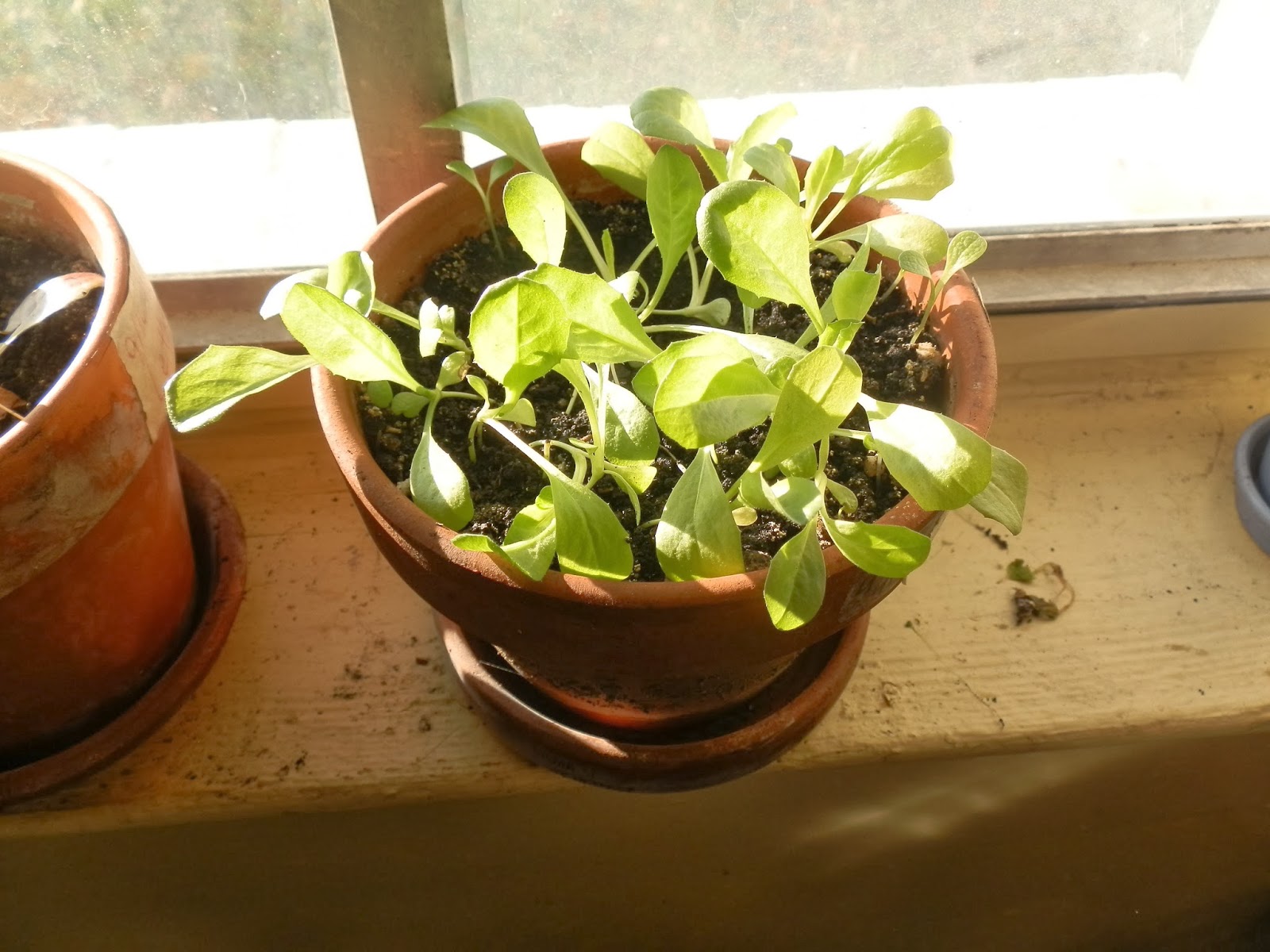
The Indoor Winter Paradise. Over this past winter, I grew lettuce indoors. I wrote a detailed piece on it here. To sum up: I planted 6 containers. One was a tiny container with 6a single Black-Seeded Simpson lettuce plant. It was cute, to be sure, but a waste of space. Next year, I'm sticking to 6" containers or bigger. 2 were planted to spinach, and 3 more to red sails lettuce and endive. I planted the last 5 heavily. The spinach never grew large, but the tiny leaves were wonderful in salads. However, the two containers barely produced any real bulk, and so this coming year I will not plant more spinach indoors. The lettuce and endive containers were incredible. We ate loads of salad all winter long. A thorough harvest of the containers was enough for 2 large side salads. I will definitely do this again every. single. year. There is no better way to beat the doldrums of a bleak winter than to harvest a fresh salad. Seriously, though.

The Senior Citizen Peppers. Last year I heard about overwintering peppers and so I decided to give it a go. I'd only got 1-3 peppers per plant last year, so I figured I had nothing to lose. I chose the best two Jimmy Nardello peppers I had last year: the one that gave me the first pepper (although only the one) and the one that gave me the most (3). I dug out about 8" from the stem and plopped the plant into a medium-large container. I filled it in with earth and reused potting soil. When I first brought them in from the crisp autumn air to the warm indoor climate, they exploded with new growth and flowers. I didn't want them to pucker out, so I picked off all of the flowers so they wouldn't put energy into producing fruit. I put them into an area that got some indirect light, but no direct light. It was by a leaky window, so it was cool, but not freezing. After a couple of weeks, they dropped some of the leaves and went dormant. I watered them every week or two but didn't give them any food. Then, in spring, quite on their own, they vamped back up. Lots of new growth and flowers, so I moved them to an area with some good light. I picked off all the flowers so they could focus on growth for now. I planted them out into the garden the same day as my first-year transplants. Now, several weeks later, the results are in. First year plants: 1 of 7 has two small peppers, the rest have flowers only or nothing at all yet. Overwintered plants: I've already harvested 5+ full sized peppers (unripe, but huge) from each plant. Some readers have said you can overwinter a plant for several years. I'll definitely do this again every year.

The Pairing. Tomatoes and Pole Beans. Last year, I planted my Scarlet Runner Beans next to my tomatoes. They kept going off their trellis and onto the tomato plants. At first, I tried to put them back on the trellis, then just let them go. The bright red flowers looked beautiful next to the rich green of the tomato plants and they seemed happy enough together. This year, I picked some pole beans to plant with my tomatoes intentionally. I picked Dean's Purple Podded Pole Beans so I could see the beans among the leaves for easy harvest. I planted 4 beans around the tomato cage. The beans grew up the cages, then over to another cage, then out, then dropped down to lower on a cage, and back up. They are all over the tomato plants. The flowers and stems are a lovely purple and it looks incredible. I have no pole beans yet, but lots of flowers, so hopefully soon. Of the 8 tomato plants with beans growing around them, 5 have tomatoes and loads of them. 3 do not have any tomatoes or flowers yet, but they are the plants in the back and in the shadiest part of the bed (remember that I have little full sun, and this affects my garden a lot), so I assume that the shade is the cause, and not the beans. I will update as the harvest season arrives.


The Perpetual Lettuce Bed. I dug up an overgrown, ugly area of the yard. It is shaded by a big tree in the neighbor's yard. I want it to become a perpetual lettuce bed. For this year, I planted a lot of random things: broccoli (all eaten by bugs), cauliflower (all eaten by bugs), spinach (disappeared overnight), cilantro (spotty germination), pak choi (all eaten by bugs), mustard greens (fantastic harvest that has lasted months so far), summer squash (loads of flowers, but no fruits yet), beans (no germination whatsoever, but they were old seeds). Now, I have some radishes and lettuce planted in some of the spaces where other things had failed to grow. The radishes seem fine, but the lettuce had a poor germination. I think the giant tree that shades the entire area may be responsible for the spotty germination, as the plants that have done okay are farther from the tree. There are some tomato and pepper plants that volunteered from the homemade compost I dumped on last autumn (black soldier flies turned that batch into a horror-show of writhing, so I dumped it out for the birds to feast on...it was terrifying, really). The tomatoes have fruited and the peppers have flowers. There are a lot of weeds, but I've been removing it as I go. This winter, I plan to dump on some compost and loads of leaves and plant it to lettuces in early spring. For this year, I've gotten some food and hope to get a little more, but it is not wildly successful. I do have hope that it can grow something, and I'm not giving up on it quite yet. If next year the germination is pathetic, I'll just sow it to something like mint and let it go wild.

The Decorative Container Garden. I decided that for the front garden, in the area between the sidewalk and the street, I wanted to put some large containers planted to pretty edibles. I decided on Burgundy Okra as the thriller based on it's rich stems and fruits, milkmaid nasturtium as a spiller, and freckles lettuce as the filler.They were not as brilliant as I expected. It's a boring planting really, and just didn't work out as I'd planned. The okra falls over without support. The nasturtium variety I picked is bushy, not spilling like I'd read online (What? Not everything you read on the internet is truth???). The freckles lettuce is an effective filler. One planting gets a bit more sunlight and is much bigger. The okra plant already has fruited. The nasturtiums are in bloom. The lettuce is wicked big and I'm harvesting enough for two-side salads every day. The other planting? The okra hasn't flowered yet. The nasturtiums failed to germinate the first time, and there's only one flower. The lettuce is much smaller and I've had to plant in a lot of Black-Seeded Simpson lettuce to try to fill it in a bit (that's all the lettuce seed I had left). The second planting is under a tree, so it get's less sunlight, and I think more rain since it is right under a branch end. It is often flooded (Yes, I need to drill a couple holes). I'll keep trying at edible landscaping, but this planting does not work.

The Pea High Chair. I have an old wooden chair I dumpster dived. It's wobbly but pretty. I imagined it covered in pea vines. I plopped it in the garden and planted peas all around it. I planted spinach underneath it, thinking that since spinach bolts easily, maybe the shade from noon-sun would protect it. The peas germinated well and looked great. And then....then the groundhogs came in. They ate them down, and then we'd attempt to repel them with airguns, solar-powered high-pitched squealing motion detectors, screaming, cursing, and finally, even some organic small-mammal repellent (I believe it was some sort of predator urine). They kept coming back and nibbling the shoots. Sigh. I got a few peas, but that's it. The spinach germinated okay, but died off shortly. Failure. I will not grow peas again at this property. Two years I've planted, multiple times a spring, and the groundhogs or rabbits always get them.

The Hugelbeet-Inspired Bed. There was a low spot in the back yard, so I decided to do a hugelkulture-inspired project. I dug out the sod and top soil, then laid down a bunch of branches and logs. I sprinkled in compost and composted cow manure, then added some leaves then turned the sod upside down on top. I put the top soil on top of that, and added a couple bags of compost. It rested a good 6 inches higher than the rest of the yard. As time has passed, it has shrunk down so it is roughly even with the rest of the yard instead of being 6 inches lower than the surrounding ground. On that count, it is a success. In other ways, it is mixed. I planted beans,cukes and squash on the bed. I know that squash is a heavy feeder, but I had extra seedlings, so there they went. The squash and cukes have flowered, but no fruit. The beans all flowered like mad and have put on a thick set of beans. The leaves on everything are light green and yellow. I think this is simply a matter of it being a first-year bed, and the wood is tying up some nitrogen while it breaks down. Between the aging of the wood, some coffee grounds I've been dumping on it, and my plans to work in the expired bean plants, I think next year will be better. I'm getting a harvest from it, and that's the important thing! There have been a lot of weeds, but I've noticed that in every new bed. I've been faithful at weeding, however, and the stand of weeds has diminished significantly.

The Crowded Room. I have a couple containers in the front garden by the front door overcrowded in an attempt to see just how much I can cram in and still get a harvest. One planter has a tomato plant and an underplanting of radishes and beets. The other has 4 pepper plants and an underplanting of radishes. In the first container, I have a lot of tomatoes. Score. The beets have been sulking and not putting on any growth. The radishes are starting to bolt. I will likely harvest the beet greens for salad and allow the radishes to put on those deliciously crunchy seedpods. In the second container, the peppers look okay and have unopened flower buds so far. I will likely harvest half of the many radish plants to put into salads and see if the remaining plants will bulb up at all.

So what about you? Have you had any fun experiments in the garden?


Shared on:
Homestead Barn HopThe Self Sufficient HomeAcreWildcrafting Wednesday

Monday, November 18, 2013

Salad from the Winter Garden

I am experimenting with winter gardening this year. Nothing big. I'm not going to be supplying all of the family's veg from the winter garden this year but it's still worth doing. I like the idea of learning some basics to supplement my families food. Being able to grow some food in winter will save us a bit of money, increase our self sufficiency, provide valuable fresh veggies in a season when they are hard to come by (eating either the stored veg dehydrated, frozen or canned in season, or veg from the grocery that's flown in 1500 miles before I eat it), and will possibly clean the air in the home as well. And it's fun!

In the back yard, I have carrots, radishes and kale planted. I planted them in late August and they are all very small. Growth is pretty slow. However, the last few winters have been pretty mild, so maybe if this year is mild too I'll get a bit more growth. I had loads of seed leftover from the main gardening season, and was given some seed while talking with gardeners at the World's Longest Yard Sale, so I lose nothing by putting some extra seeds in the ground. If a strong freeze hits and all the outdoor plants die, I'll just work the green matter back into the earth and call it fertilizer.


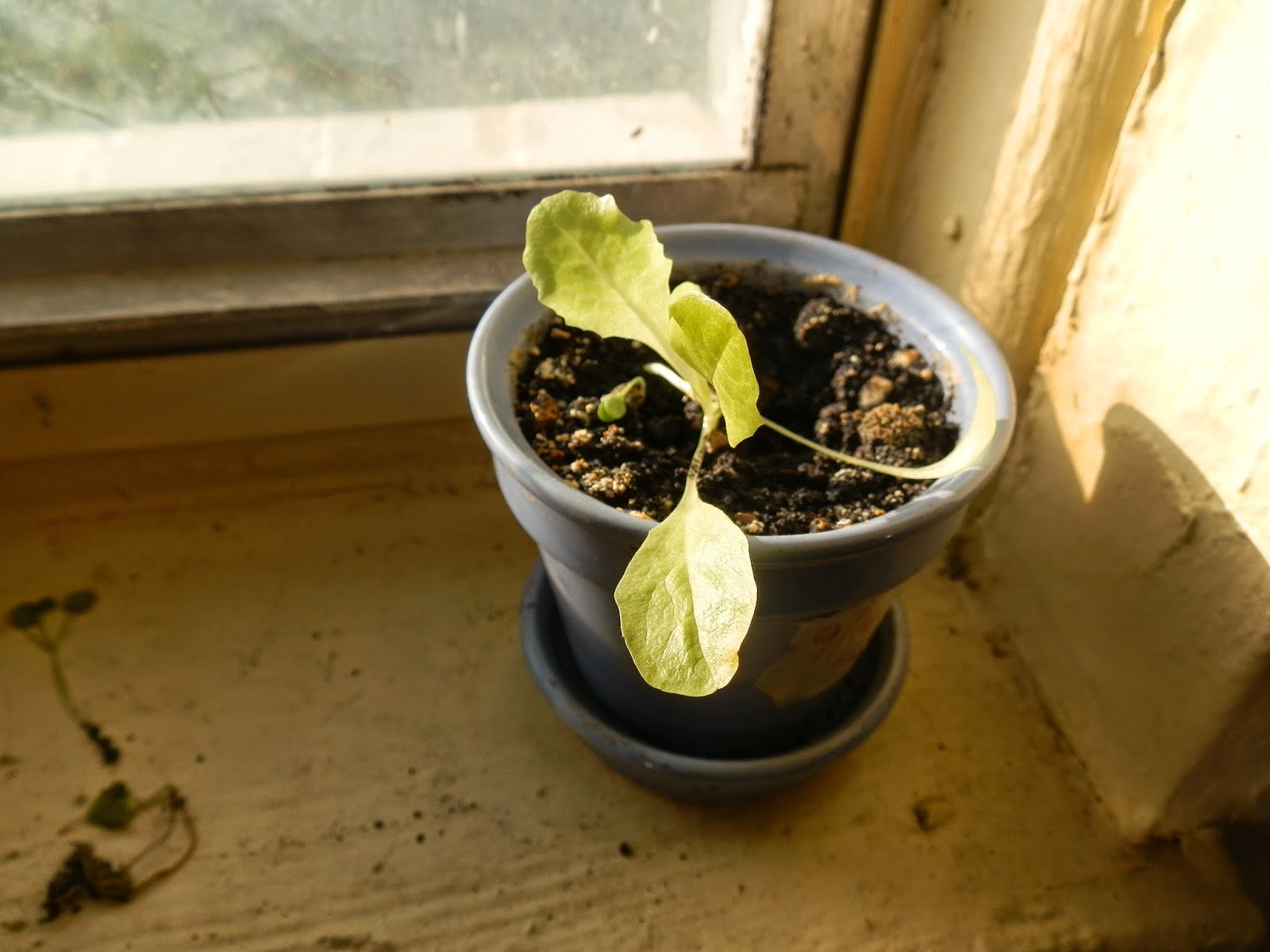
Indoors I started several pots of greens. They grow in my laundry room on the south-facing windowsill.  I have two pots of spinach and four pots of two different varieties of lettuce. They are still in the baby green stage of growth and have been growing for a few weeks. I need to plant a second batch of greens so that there is no (or not much) gap in fresh salads. The real problem I will run into is space, as Ray cat has claimed all of the other south-facing windowsills and will push off anything I put on them. 
I planted them in sterile potting soil I had leftover from starting seedlings this spring. When I harvest the last of these lettuces and replant, I will mix in a bit of compost from the bottom of the bin just to freshen it up a bit. I water them about once a day, when I remember. I'm bad about that. I know that using self-watering containers would be best, but I don't have any. These pots I found at yard sales for pennies apiece, so I use them. My parents saved the plastic seed packs from their flower garden last spring, so I can use those also. Again, these are seeds leftover from the main gardening season. So I'm not really out much money, just a few pennies worth of water over the season.

After reading this article on overwintering peppers indoors, I selected my best two pepper plants. They are Jimmy Nardello peppers. One plant was the plant that gave me the first pepper of the season. The other was the plant that gave me the highest number of peppers. I dug the plants out of the ground leaving as much dirt and roots intact as possible. I filled in the rest of the pot with potting soil. I sprayed them off and picked off all of the flowers and flower buds. I took them inside and have watered them a few times. I don't have any really cool areas to store them (the article recommends a constant 55 degrees), but I put them by a leaky patio door so once the cold weather hits, it should stay around 55-60. One of the plants produced a huge amount of flowers once it was brought in, but I picked them off. If they survive the winter, I'll plant them after the threat of frost. Hopefully I'll get an early bumper crop of my favorite pepper.

Yesterday I picked the first salad from the winter garden. From the outdoor garden, I had two baby kale plants, 3 medium sized radishes, 1 radish seedpod, 6 baby radishes, and 5 baby carrots. I left the leaves intact on the carrots and baby radishes for more bulk. I thinned out the lettuces in the indoor garden with a pair of scissors. I first trimmed out any tiny plants, then any that looked weaker than the others. From there, I thinned out any that were too close to each other. That gave me the little pile of greens you see in center right on the photo.

I added some mixed greens from the farmers market and had enough for two nice-sized salads to accompany dinner. They were delicious.

I'm very excited about getting fresh salad throughout the winter. I may plant a few containers of radishes for snacking. Wisconsin Vegetable Gardeners posted a video on growing carrots. They had good success planting carrots in a home-made hanging basket. I think I may try some of these as well so I can get some yummy carrots throughout winter and don't have to resort to those cardboard orange things at the grocery store.


Shared on:


From The Farm Blog Hop

Homestead Barn Hop
The Homesteaders Blog Hop


Sunday, May 26, 2013

Food Production with Limited Space

I love gardening. I grew up in a semi-rural area, and have been gardening for as long as I can remember. My parents used to send me to an elderly couple's house to help them with their tomato garden, and to this day, the scent of tomato leaves brings up wonderful memories. When I moved out on my own, I found myself in apartments without yards. For a few years I ached for a yard to grow a garden and thought I'd never be able to unless I could move out of the city. Fortunately, I began experimenting with small-scale gardening.

Here are some tips for those of you in apartments, cities, shaded yards, suburbs with restrictive landscaping expectations or other challenges to your green thumb.

This shaded patch by the front door provided an entire
season's worth of salads. I planted endive, landcress, and
lettuce. Some dandelion poked through, but I let it grow
since it was edible too.
If all you have is a partial shaded spot, focus on lettuce. Lettuce likes cooler weather, so the shade keeps it from overheating and bolting. At my old apartment, there was a patch of dirt by the front door. It got only a couple hours of sun each day. I was tired of it looking so trashy, so I asked the landlord if I could plant it and he said yes! I scattered a few varieties of lettuce seed over the area and hoped for the best. Soon I was enjoying microgreens to supplement my salads, then I was getting all of the lettuce we could eat in salads and sandwiches. Since the area was shaded, it didn't bolt in the hot weather. That little 2x3 foot patch kept us in salad from late May til October. Other plants that may do well in partial shade: broccoli, peas, beets, radishes, beans, carrots, turnips and bok choi.

Plan to keep your garden plot working all season long. Early in the season, get some radishes, lettuce and spinach in. Once that's ready, it will be time for summer crops like tomatoes and peppers. Then as you take out the spent plants, get more lettuce, radishes, spinach and perhaps some kale in. Look for varieties that can withstand snow so you can go out in early winter, brush away the snow and dig out dinner.


By the time the harvest came in, the bean plants were 15 feet
tall and grew to the top of the branches behind the trellis.
The trellis is just a planted headboard I curb-shopped.
Use your space wisely. When planting lettuce, alternate lettuce seeds with radish seeds. Radishes will mature while the lettuce is still tiny and will be harvested before the lettuce needs the space. Plant lettuce, radishes, basil or carrots in between tomato plants to use otherwise wasted space. Grow vertical when you can to make the most of your square footage.

Grow multi-purpose plants. Everyone knows you eat radish bulbs, but the leaves are also edible. Beet and carrot leaves are also edible. When choosing a bean variety, look for one that you can eat immature as a pod,
or as a dry bean (Scarlet runner beans are good for this, and they're beautiful!)

Who can say Romanesco Broccoli isn't beautiful?
If you live in an area with strict rules about landscaping and gardening, mix edibles in with flower beds. Edible flowers are beautiful and add a bit to salads or can be used for fritters. Ornamental kale, swiss chard, or red-leaf lettuces hold their own in a flower bed.

Salad made from thinnings from the
outdoor radish and carrot beds and
from the indoor lettuce pots.


Eat your thinnings. If you have to thin radish, carrot, beat or lettuce, make a salad out of the tiny veggies.

A sunny window is the perfect place to grow
some lettuce for winter salads.
Grow some edibles indoors. I've had mixed success with indoor food gardening, but my failures were really because I was stupid. For example, my first indoor food garden, I used all tiny containers and tried to grow tomatoes and onions in containers that were in no way appropriate. However, even being stupid, I still got lots of green onions, some lettuce and exactly one pea-pod. In later years, I had better luck by choosing appropriate plants and containers. Lettuce, radishes and herbs will grow in smaller containers. If you have the space for larger containers, you can grow a lot of other things, such as tomatoes. Look for "container" or "patio" varieties. Put in a south facing window with lots of sun or get a grow light. Don't forget to water once or twice a day.


If you have a small patio or balcony that gets a bit of sunlight, you are in luck. A lot of great vegetables and fruits can be grown in containers. I've grown tomatoes, peppers, cucumbers, lettuce, onions, radishes, cucumbers, and more in containers in the patio at my old apartment. The south-facing patio got just enough sunlight. I salvaged food-grade buckets from my job at a restaurant for many of the plantings, and used small trash cans that I bought for less than a dollar at a thrift store.

If you have no yard, no balcony/patio/porch, and no sunny windows, you can still grow a bit of food: sprouts. Get lentils, mung beans, or other beans/seeds, soak for 8 hours in water, then drain, rinse and place in a cupboard. Once or twice a day, rinse and drain well. Soon you'll have delicious sprouts to add to sandwiches, salads or stir-fry. It's an easy and cheap way to grow a little food.

Pick wild foods in your area. Dandelion leaves are a deliciously bitter green for salads or steamed to use like spinach, the flowers make incredible fritters or jelly and the roots make a delicious coffee substitute. Violet flowers and leaves are great additions to salads. Red clover flowers make a nice tea. I find lots of edibles growing in the heart of the city, and I take full advantage of them. Fruit trees left over from a more self-reliant time are still dotting the city landscape. Look for mulberries, crab apples (use in jelly or add to other apples when juicing for a bit of zing), and pears growing along parking lot edges or hanging over sidewalks.

Guerilla garden. If you cannot find a place that you are allowed to grow some food, look for a place that you can grow food without anyone noticing. Abandoned lots and empty planters (such a depressing sight!) beg for some green beauty. Take over the flower beds that your landlord has long since stopped planting. A sprinkling of lettuce seeds are easy enough to plant without anyone noticing.

Shared on:

Wildcrafting Wednesday

http://realfoodforlessmoney.com/simple-lives-thursday-175/

Related Posts Plugin for WordPress, Blogger...